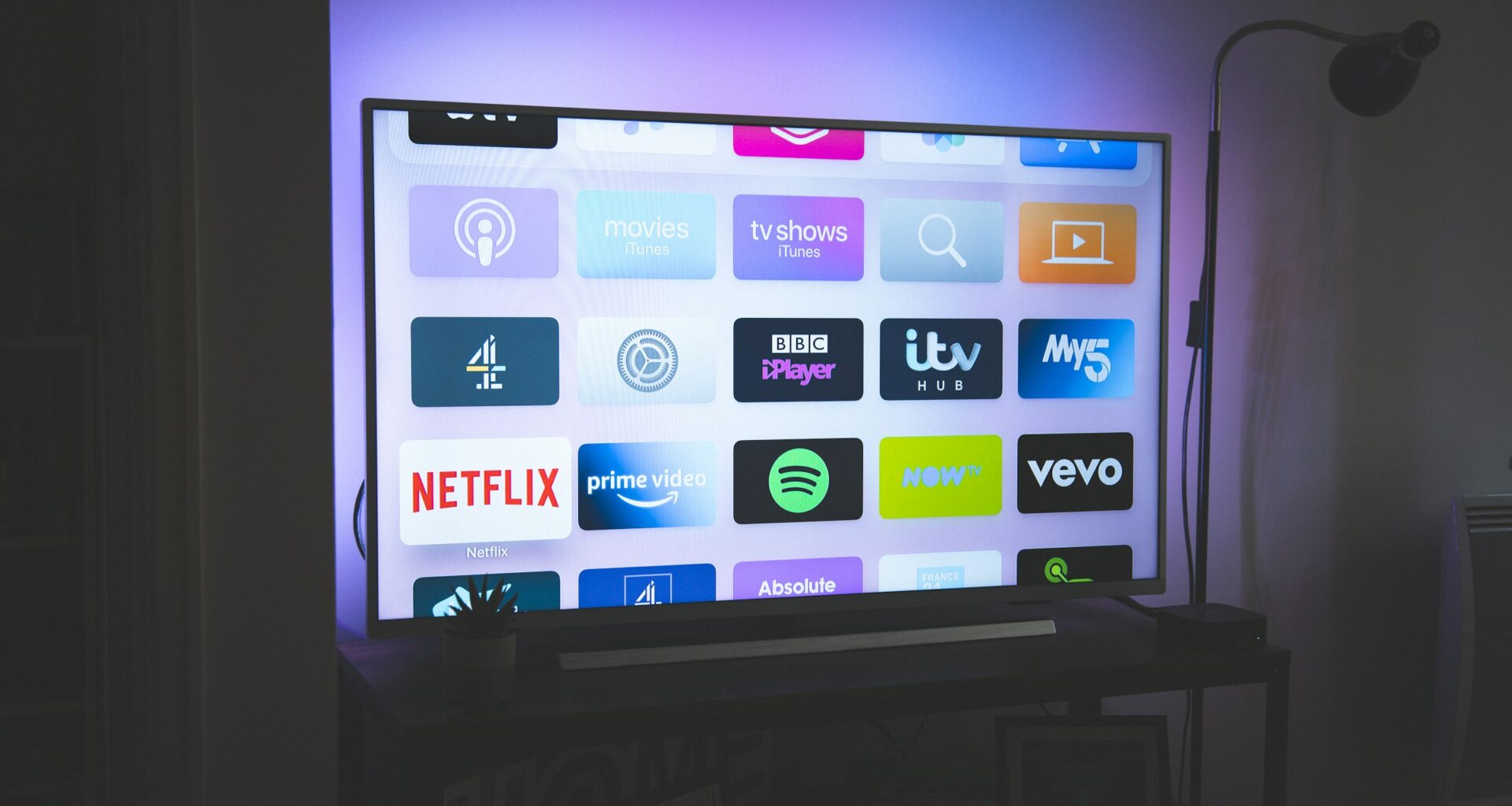

Walk into a working color suite and look past the colorist’s desk. There’s a TV on the wall. Not a reference monitor, a TV: usually a big LG OLED, playing the same timeline the colorist is grading, and the client on the couch is watching that instead of the five-figure reference display. Suites have worked this way for years. A calibrated OLED TV is how you show a client what their film will look like in the room where films get watched, and it costs less than a fifth of what the reference panel next to it does.
This guide is the whole recipe, because half of it is a shopping question and half of it is a plumbing question. Which TVs can be trusted (fewer than you’d think, and the answer changed this year), and how you feed one a signal your computer can’t meddle with (a $229 to $445 box, not an HDMI cable from your graphics card). Skip the plumbing half and the nicest OLED on earth will lie to you all day.
One boundary before the picks, so nobody spends rent money on a misunderstanding: a consumer TV is a client and confidence display for Rec.709 work, and a very good one. It is not an HDR mastering reference, and no menu setting makes it one. If a contract says “reference monitor,” that sentence starts at the Flanders Scientific DM242, and our grading monitor guide covers that conversation. This article is about the other screen in the room. The desk monitor you cut on is a third conversation, covered in the best monitor for video editing guide.
Last updated: August 2026. Some links below are affiliate links; buying through them supports the site at no cost to you. TV and I/O prices moved a lot this summer, so every price here is a late-July snapshot. Check the listing.
TLDR
If you just want the answer: buy the LG C6 65-inch at $1,999.99, feed it from a DeckLink Mini Monitor 4K ($229) if you run a tower or an UltraStudio Mini Monitor 12G ($445) over Thunderbolt, and calibrate it with Calman Home for LG ($145 a year) plus a Calibrite Display Pro HL. That’s a wall-sized client display a working colorist can defend, for about $2,650 all in. The desk-sized version of the same idea is the 42-inch LG C5 at $999.99, which brings the whole build under $1,700.
The TV picks
The pick: LG C6 65-inch
LG holds this slot for one reason that has nothing to do with picture-quality shootouts: the calibration path. LG OLEDs from 2019 onward have an internal pattern generator and accept calibration LUTs written into the TV’s own hardware, a 1D LUT for greyscale and a full 3D LUT for color, driven automatically by Calman over your network. No other TV brand lets a $145 software license and a colorimeter turn the set itself into a corrected display. Portrait Displays’ 2026 compatibility table already lists the C6 as fully supported, so the usual “wait a few months for calibration support on the new model” advice doesn’t apply this year. Add Filmmaker Mode to kill the consumer processing, Dolby Vision playback for checking DV deliverables, a native 10-bit panel, and four HDMI 2.1 inputs, and the C6 checks every box this job has.
The price story is the backwards part. The C6 65-inch launched at $2,699.99 and is now $1,999.99 at Best Buy, $700 off and in stock. Normally I’d point you at last year’s model and let someone else pay the new-model tax, but the shelves made that decision for us: the C5 65-inch is done at regular retail (open-box units only), so the discounted C6 is competing against a TV you can’t buy new. The current model is the value buy this year, which is a strange sentence to type in a guide like this. Smaller sizes if the wall is smaller: 55-inch at $1,499.99, 48-inch at $1,299.99.
And here’s what you’re not missing by not spending more: the 65-inch C6 is a WOLED panel, same class as the C5 before it. LG’s new RGB Tandem panel only ships in the 77 and 83-inch C6H models. The α11 processor upgrades matter for game modes and upscaling, none of which touches a calibrated clean feed. Buy the C6 because it’s the one on shelves at $700 off, not because the spec sheet grew.
Desk-side and small suites: LG C5 42-inch
The one C5 still healthy at retail is the 42-inch at $999.99, and it happens to be the perfect desk-side size. Same AutoCal path, same Filmmaker Mode, same 10-bit panel, sitting an arm’s length behind your grading monitor for under a grand. If your client sits close instead of across a room, this is the cheapest legitimate way into everything this article describes. If 42 inches feels small for the room, the C6 48-inch is $1,299.99, and since LG priced the C6 42-inch at the same $1,299.99, the 48 is the obvious buy of the two.
The alternative: Sony Bravia 8 II
For years the standing objection to Sony was “gorgeous panel, no real calibration workflow.” That objection died in February: Portrait Displays now publishes a full Calman Ready workflow for Sony BRAVIA sets at the same Calman Home tier as LG (v5.17.0 or later). It connects over your network through the Calman for BRAVIA app on the TV, and AutoCal handles multipoint greyscale and color gamut through the TV’s internal CMS, in SDR, HDR, and Dolby Vision. Two Sony quirks worth knowing before you commit: the HDR calibration is derived from the SDR pass rather than run separately, and settings save across two places (picture mode and color temperature slots), so you follow Portrait’s pairing scheme or you overwrite your own work.
So the Bravia 8 II 65-inch at $2,999.99 (55-inch at $2,398) is a credible pick. Here’s why it’s the alternative rather than the winner: Sony’s AutoCal drives the TV’s internal picture controls, while LG’s writes actual 1D and 3D LUTs into the panel hardware, which is the deeper correction. And the Sony costs $1,000 more than the C6 for zero advantage in this specific job. If you’re a Sony house and the client sessions skew theatrical, it’s a fine way to spend the difference. Everyone else keeps the $1,000.
The documented skip: Samsung S95 series
Samsung’s S95F and 2026 S95H are excellent panels, and they’re out of consideration anyway, because Samsung still doesn’t license Dolby Vision. That’s not review-site folklore; it’s on Samsung’s own spec sheet for the current S95H, which lists HDR10+ and Filmmaker Mode and has no Dolby Vision entry anywhere in the video section (the only “Dolby” on the page is Atmos, under audio). If a client delivers Dolby Vision, the set silently falls back to HDR10 and shows them something other than their deliverable. Samsung’s spec sheet also rates its own Smart Calibration feature as “Basic,” which is not the word you want describing the correction on a client display. Nothing wrong with the picture. Wrong format support for the job.
The I/O box (the half people skip)
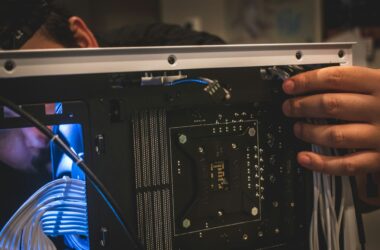
Now the plumbing. Everything above is wasted if the TV hangs off your graphics card, for reasons the how-to section covers in detail. The short version: Resolve needs to own the signal end to end, and it does that through a dedicated output device. Blackmagic owns this product category in practice, and 2026 turned its lineup over, so here’s where it stands.
For towers: DeckLink Mini Monitor 4K
If your grading machine has a free PCIe slot, the DeckLink Mini Monitor 4K is $229 and has been the default answer for years: a low-profile card with 6G-SDI and HDMI 2.0a out, 10-bit, driven natively by Resolve. Know its ceiling before you buy: it tops out at 2160p30. UHD at 24, 25, or 30 frames covers most film and doc timelines, so for a lot of you that ceiling is theoretical. If you cut 4K60 sport, gaming, or social content, this card cannot play your timeline at full rate, and you want the UltraStudio below instead.
For laptops and Thunderbolt machines: UltraStudio Mini Monitor 12G
Blackmagic refreshed its small Thunderbolt boxes this month, and the new UltraStudio Mini Monitor 12G ($445) is the box this article has been waiting for: Thunderbolt 4, HDMI 2.0 plus 12G-SDI out, UHD up to 2160p60, up to 12-bit RGB 4:4:4 over HDMI, Rec.709 and Rec.2020 signaling, and HLG and PQ static metadata. That is the exact right spec for feeding an OLED from a MacBook or any Thunderbolt machine, at a price that used to buy you an HD-only box.
The availability asterisk, because I’d rather you hear it from me than from an empty cart: Blackmagic announced it as available now, but as of late July no US retailer lists it yet. It isn’t sold out; the resellers simply don’t have it in their systems. The link above goes to Blackmagic’s own product page; by the time you read this it should be at the usual resellers, and if it isn’t, it’s worth the short wait rather than settling for the wrong box.
Budget, HD-only: UltraStudio Express Monitor 3G
If your deliverables are 1080p (a lot of client work still is), the new UltraStudio Express Monitor 3G does the same clean-feed job for $179 ($175 street): USB4/Thunderbolt, HDMI and 3G-SDI out, with a hard 1080p60 ceiling. It replaces the old Thunderbolt Monitor 3G, and as of this writing it’s preorder-only at retail, so plan a couple of weeks of lead time. For a 1080 client feed into a TV that upscales cleanly anyway, this is the bargain of the whole category.
The one to not buy right now: UltraStudio 4K Mini
The UltraStudio 4K Mini is still on sale at $1,229 ($1,199 at Amazon), still Thunderbolt 3, still the 2019 design, and Blackmagic just shipped a $445 Thunderbolt 4 box that covers the monitoring half of its job. Unless you specifically need capture and playback in one chassis, paying 2.7 times the price for older I/O is a bad trade. The asterisk: it is currently the only UltraStudio you can get delivered this week. If your client session is Monday and the Mini 12G still isn’t at retail, that’s what the extra money buys you (immediacy, not capability), and you should know that going in.
One more tier for completeness: if you grade Dolby Vision or HDR10+ deliverables and want Resolve’s “Enable HDR metadata over HDMI” feature or simultaneous master and target outputs, Resolve gates those specific features to the big cards (DeckLink 8K Pro G2 at $855, DeckLink 4K Extreme 12G at $1,245). Note that’s a Resolve feature gate, not a signal limitation; the $445 box already carries static HDR metadata. Rec.709 client work, which is what this article is about, never touches any of it.
The picks side by side
| Display | Street price | Panel | Calibration path | Dolby Vision | Role |
|---|---|---|---|---|---|
| LG C6 65″ | $1,999.99 | 10-bit WOLED | Calman AutoCal, 1D + 3D LUTs written into the TV | Yes | The pick |
| LG C5 42″ | $999.99 | 10-bit WOLED | Calman AutoCal, 1D + 3D LUTs written into the TV | Yes | Desk-side value |
| LG C6 48″ | $1,299.99 | 10-bit WOLED | Calman AutoCal, 1D + 3D LUTs written into the TV | Yes | Small suite |
| Sony Bravia 8 II 65″ | $2,999.99 | QD-OLED | Calman AutoCal via internal controls | Yes | The alternative |
| Samsung S95H 77″ | $4,299.99 | QD-OLED | Samsung Smart Calibration (“Basic” per Samsung) | No (HDR10+ only) | The skip |
| I/O box | Price | Bus | Max output | Status (29 July 2026) |
|---|---|---|---|---|
| DeckLink Mini Monitor 4K | $229 | PCIe | 2160p30 | Thin stock, third-party seller |
| UltraStudio Mini Monitor 12G | $445 | Thunderbolt 4 | 2160p60, 12-bit RGB over HDMI | Announced; not yet at US retail |
| UltraStudio Express Monitor 3G | $179 ($175 street) | USB4 / TB4 | 1080p60 | Preorder |
| UltraStudio 4K Mini | $1,229 | Thunderbolt 3 | 2160p60 | In stock; wait unless urgent |
What makes a TV gradeable at all
The picks above weren’t chosen on picture quality, because at this tier every OLED is beautiful. They were chosen on six requirements, and if you’re eyeing a different set, run it through the same list.
A processing kill switch. Filmmaker Mode (LG, Samsung, Panasonic) or its equivalent shuts off motion smoothing, sharpening, dynamic contrast, and noise reduction in one move. Without it you’re grading through the TV’s opinions. A native 10-bit panel, because an 8-bit panel showing a 10-bit feed will band in your gradients and you’ll chase artifacts that don’t exist. A hardware calibration path, which is the real separator between brands and the reason LG wins this guide: correction stored in the display itself beats correction bolted on anywhere else. A full-bandwidth HDMI input, meaning the port’s deep color mode is switched on so the set doesn’t silently negotiate down to 8-bit 4:2:0. Black-level agreement between what the I/O box sends and what the TV expects, covered in the setup below. And burn-in discipline: an OLED on this duty shows the clean program feed only, never a frozen Resolve UI, which is a bet OLED owners lose. Our grading monitor guide makes the same warning about desktop OLEDs, and it goes double for a 65-inch one.
The signal chain: how to hook it up properly
Why your GUI monitor lies (and a plain HDMI cable would too)
Everything on your desktop passes through your operating system’s color management, your GPU driver’s processing, and the desktop compositor before it hits glass. That pipeline is built to make spreadsheets and browsers look pleasant on whatever display is attached, and macOS and Windows each do it differently, which is why the same export looks different in QuickTime, Chrome, and your NLE viewer. The Resolve viewer on your GUI monitor lives inside that pipeline. It’s a preview, not a reference.
An I/O box opts out of all of it. Resolve hands the video frames to the Blackmagic device directly, and the device generates a video signal with the levels, bit depth, and color space tags Resolve told it to use. The OS never touches the image. That’s the entire product: not a fancy adapter, an escape hatch from your computer’s color opinions. So the chain looks like this: Resolve → Thunderbolt or PCIe → Blackmagic box → HDMI → TV, with the calibration correction living inside the TV at the end of it. If the difference between Rec.709 and Rec.2020 in that sentence is hazy, our color spaces reference walks through it.
Resolve setup, in order
- Plug in the box, then check Preferences → Video and Audio I/O and select the Blackmagic device under “For capture and playback use.” If it doesn’t appear, install Blackmagic’s Desktop Video software first and reboot.
- Open Project Settings → Master Settings → Video Monitoring. Set the resolution and frame rate to match your timeline, and set the bit depth to 10-bit.
- In the same panel, note the data levels setting (Video or Full). Leave it on Video unless you have a specific reason, and remember which one you chose, because the TV has to agree with it (next section).
- For a Rec.709 job, that’s the whole setup. Play the timeline and the TV should light up with your program, no desktop, no UI, just picture.
TV setup: the five settings that decide everything
Out of the box, a consumer TV is tuned to win a showroom shootout, and every one of those enhancements is a lie you have to switch off. On the LG sets, in order of importance:
- Picture mode: Filmmaker Mode. This one move disables most of the processing stack. On the Sony, use the picture modes Portrait’s Calman workflow calibrates (“Custom for Pro”).
- Turn on the port’s full-bandwidth mode. LG calls it HDMI Ultra HD Deep Colour, and it’s off by default, per input. Leave it off and the TV renegotiates your lovely 10-bit feed down to a reduced format without saying a word, and you get posterized gradients and HDR that looks sunburned. The exact menu location shifts between webOS versions, so check your set’s manual for where HDMI input settings live; the setting name is what you’re hunting for.
- Match Black Level to your data levels. LG’s Black Level setting (Low/High) has to agree with the Video/Full choice you made in Resolve. The failure is obvious once you know it: blacks either crushed to mud or lifted to milky gray. If your image looks like either of those, flip this before you touch anything else. This mismatch is the classic first-hour failure of every TV-as-monitor setup.
- Kill the remaining processing by hand. TruMotion, Real Cinema, Dynamic Contrast, Dynamic Tone Mapping, AI Picture, Energy Saving, and any sharpening. Filmmaker Mode gets most of these, but verify each one, because energy-saving features especially love to ride along and pump the brightness around.
- Set the aspect to Just Scan (1:1). Otherwise the TV overscans, cropping a few percent off your frame edges and softening everything with a rescale. You framed that shot; see all of it.
Calibration: the part that makes it legitimate
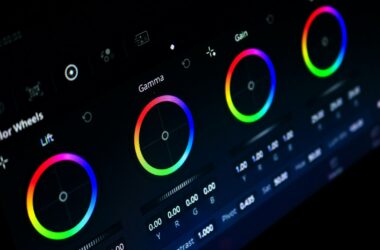
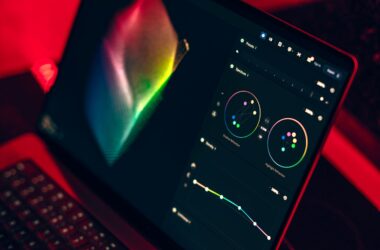
Filmmaker Mode gets an LG OLED into the neighborhood of accurate. Calibration is what lets you defend it to a client, and on LG it’s shockingly civilized. You need Calman Home for LG ($145 a year) on a laptop on the same network as the TV, and a colorimeter: the Calibrite Display Pro HL ($279 list, dips on sale) is the one to own, and the same puck our calibration guide already recommends for your desktop displays. Calman connects to the TV by IP address (the set shows an 8-digit passcode the first time), runs its patterns off the TV’s internal generator, measures with the puck, and writes the correction into the TV itself: a 1D LUT pass for greyscale in about half an hour, and a 3D LUT pass for color gamut in 40 to 50 minutes. When it’s done, the correction lives in the panel. It applies to your clean feed with no computer in the loop, which is exactly what you want.
Four fine-print items worth knowing going in. Calibration is stored per picture mode, not per input, so calibrate the mode you’ll grade in and then leave that mode alone. Dynamic Tone Mapping has to be off while you calibrate. Update Calman before you start: the 2025 C5 sets had a crushed-blacks bug with Calman v5.16.7’s pattern source that wrecked greyscale runs, fixed in Calman 2026 v5.17.0, so being current is not optional. And the Home tier gives you the calibration but not Calman’s PDF reports; if you want a printout to wave at a producer, that’s the step-up license. For the room around the TV, the MediaLight Mk2 bias light (about $73) is the same cheap upgrade we recommend behind every display, and it matters more here because a 65-inch panel in a dark room is a lot of glare surface.
Sony owners: the shape is the same (Calman Home, v5.17.0+, colorimeter, TV on the network) with the Calman for BRAVIA app installed on the set from Google Play. AutoCal runs multipoint greyscale and drives the TV’s color management system, and the HDR result is derived from your SDR pass. Facility folks who want to go deeper than Calman Home: Light Illusion’s ColourSpace drives LG panels too, at facility pricing.
Troubleshooting the two classic failures
The HDMI handshake. SDI, the connector pro monitors use, locks to a signal and stays locked. HDMI renegotiates: every time the format changes, the TV and the I/O box have a little conversation, and sometimes that conversation fails. You get a black screen, a flash, or a feed that comes back in the wrong format. It’s a known behavior of consumer HDMI, not a defect in your specific gear. Three habits keep it rare: keep your Resolve output format fixed rather than letting it follow every timeline change, use a certified Ultra High Speed HDMI cable rather than whatever was in the drawer, and when a handshake does fail, re-select the output format or reseat the cable and let it renegotiate. If a session absolutely cannot hiccup, that’s the argument for an SDI-input professional display, and that argument costs $4,395.
Burn-in. The TV gets the program feed only. No Resolve UI, no scopes, no desktop wallpaper, no pausing on a slate and going to lunch. OLED image retention comes for static graphics, and the whole economics of this setup depend on the panel lasting years. Let the TV run its pixel-refresh cycles when it asks, and put the screensaver on the suite machine, not the client display.
FAQ
Can I master HDR on this setup?
No, and it’s worth being precise about why. A calibrated C6 plays HDR10 and Dolby Vision the way a good living-room set does, which makes it a fantastic HDR confidence check. But mastering HDR means trusting the display’s absolute brightness behavior against a standard, and consumer sets apply their own tone mapping with their own opinions. Grade your HDR deliverable on a reference display (rent one if the job warrants it, per the grading monitor guide) and use the TV for what it is: the world’s best preview of the couch.
Everyone recommended the LG C5 65-inch. Should I hunt one down?
The C5 65-inch had a great run as the value pick, and it’s over: new units are gone from regular retail, and what’s left is open-box stock and marketplace sellers. If a clean open-box one crosses your path at a real discount, it calibrates exactly like the C6 and you should feel fine about it. But as a plan, chasing a discontinued SKU to save a few hundred dollars against a $1,999.99 C6 that’s in stock today isn’t worth your week.
Why not just buy a big desktop monitor instead?
Different job. Your grading monitor is the display you make decisions on at arm’s length; the TV is the display your client watches from a couch, rendering the image the way their TV at home will. The 65-inch size is the point: viewing distance, living-room brightness, consumer tone handling. The desktop side of that question is the grading monitor guide‘s territory.
Does the DeckLink Mini Monitor 4K really cap at 2160p30?
Yes. Blackmagic’s own spec page says all formats up to 2160p30, and there’s no setting that changes it. It’s the trade that makes the card $229. A 24 or 25fps feature timeline never notices; a 4K60 timeline needs the UltraStudio Mini Monitor 12G or a bigger DeckLink.
In conclusion
The full wall build: LG C6 65-inch ($1,999.99) + DeckLink Mini Monitor 4K ($229) + Calman Home for LG ($145) + Calibrite Display Pro HL ($279) lands around $2,650: a calibrated, hardware-LUT-corrected, 65-inch client display for well under the price of a 24-inch reference monitor. The desk build swaps in the C5 42-inch and comes in around $1,650. Either way, the money is doing something specific: not a prettier picture, a picture you can stand behind when the client asks “is this what it’ll look like on my TV?” and the answer needs to be yes.
And that’s it! As always, what you see here is what works for me, my clients, and my crew. The TV is one corner of the color suite; the grading monitor you make decisions on and the calibration habit that keeps both screens truthful are the other two, and the rest of our buyer’s guides live on the Gear Guides page. Questions about your specific room or a set I didn’t cover? Comments are open.