


Stills shooters want a monopod that is light and tall, and video shooters want one with a fluid base. That split decides the purchase before any brand does. A sports or wildlife photographer holds a long lens up for hours and needs a column that weighs about a pound and reaches eye level. A video shooter needs the foot of the column to pivot on a damped joint so a pan starts and stops like a pan, and pays for that in weight. The three monopods here cover both sides. One does both jobs at $269.00, one is the tall video column at $225.79, and one is the carbon stills stick at $88.00.
Our support guide for solo shooters already ranks the first two alongside tripods and gimbals for a one-person video crew, and the verdicts here agree with it. What is new here is the stills side, a spec table and the fluid-base decision.
Some links below are affiliate links. Buying through them supports the site at no extra cost to you.
TLDR
The iFootage Cobra 3 Strike is the pick for anyone who shoots both stills and video, at $269.00 from iFootage’s own Amazon storefront. One press on the column changes its height with one hand mid-shot, the fluid base holds a pan, and the detachable tri-feet let it stand on its own for a moment. If you only shoot video, buy the Manfrotto XPRO+ with fluid base at $225.79. You get the tallest column here and a fluid video head in the box, on the same kind of damped base with plainer lever locks. If you only shoot stills, the pick is the Sirui P-326 carbon at $88.00. Its six sections of carbon fibre weigh about a pound and fold to under 16 inches, and it has no base and no head.
When a monopod beats a tripod
A monopod wins wherever a tripod costs too much setup time or floor space. On a sideline the shooter moves every few minutes and three spread legs are in someone’s way, while a monopod takes the footprint of a shoe and comes up to height in one motion. A wedding or a trade-show floor adds a crowd to the same problem, and a monopod shoots over heads where a tripod cannot be spread. Behind a 400mm or 600mm lens the monopod carries the weight between frames into the third hour. For video, a monopod with a fluid base gives a controlled pan or a slow push-in that a handheld rig cannot, with none of the leg-levelling a video tripod demands. Our run-and-gun documentary kit made that last case at length.
A monopod cannot hold a frame unattended. A half-hour locked-off interview, a second camera nobody stands behind, a long exposure or a time-lapse are tripod jobs, and the fluid-head kits in best tripod for video and the carry-on legs in best travel tripod cover those.
What matters
The base decides whether the monopod is a video tool. A plain rubber tip is a pivot point, so the camera tilts and pans around it freely, which suits stills and makes video look handheld. A fluid base is a small damped joint between the column and three short feet. The feet stay on the ground while the column pans and tilts through the joint with resistance, which is why the pan starts and stops cleanly. The feet also hold the column upright for a few seconds while a hand goes to a lens or a mic. You pay for the base in weight and in money. The Manfrotto with its base weighs 4.6 lb and the Cobra 5.54 lb, compared with 0.9 lb for the bare carbon column. The two picks with a base cost $225.79 and $269.00, and the one without costs $88.00. A stills shooter who never pans does not need one.
Lock type decides how often the height gets adjusted. Twist locks are lighter and pack flatter, but each section takes a quarter turn to free and another to set, so a six-section twist column is slow to bring to full height. Lever locks are faster per section and work in gloves, at a small cost in weight. Even so, with four lever locks between folded and full height, the adjustment stops happening by the sixth hour. A one-press column is the fastest, because one control releases the whole height range, and that is the reason the Cobra exists.
Maximum height and folded length pull in opposite directions. A standing subject at eye level needs the lens near 60 to 65 inches. A column that stops at 59 inches reaches the bottom of that range once a camera is on top, so the lens sits a little below a tall subject’s eye line. One that reaches 80 inches shoots over a crowd. More sections mean a shorter fold at the cost of stiffness at the thin end. A column that folds under 16 inches goes in a camera bag, and one around 30 inches rides in a checked case or a tripod bag.
The head is a separate decision from the base. The Manfrotto ships with a fluid video head, and the other two picks work without one. A stills shooter mounts the camera or the lens collar straight to the 3/8-inch stud, or adds a small ball head for a tilt. A video shooter who wants the camera to tilt independently of the column adds a fluid head on top of the fluid base, and the counterbalance and drag notes in best tripod for video apply to that head. A fluid base with no head is still a complete video setup, because the base supplies the pan and the column supplies the tilt.
Judge the weight by the length of the day, and count the base. A carbon column alone is about a pound, while an aluminium column with a fluid base is four and a half to five and a half. Carbon saves pounds at the same stiffness, but the video picks stay aluminium because the base is the heavy part either way. The difference goes unnoticed in the bag and decides the eighth hour on a sideline.
How the picks compare
| Pick | Sections and locks | Max height | Folded | Weight | Base | Price | Seller |
|---|---|---|---|---|---|---|---|
| iFootage Cobra 3 Strike | One-press pneumatic column, aluminium | 59 in | 33 in (minimum height) | 5.54 lb | Fluid base with pedal lock, detachable tri-feet | $269.00 | iFootage Official storefront |
| Manfrotto XPRO+ with fluid base | 4, lever (Quick Power Lock), aluminium | 79.9 in | 30.7 in | 4.6 lb | FLUIDTECH fluid base, three feet | $225.79 | Amazon |
| Sirui P-326 carbon | 6, twist, carbon fibre | 60.6 in | 15.6 in | 0.9 lb | None (rubber foot) | $88.00 | SIGONNA |
The picks
Best overall, photo and video: iFootage Cobra 3 Strike at $269.00
The Cobra 3 Strike is the monopod for a shooter who switches between a seated subject and a standing one, or between stills and a pan. One press moves its column anywhere between 33 and 59 inches with one hand, mid-shot, while the other two picks need both hands and a pause to change height. In practice that is the difference between adjusting and not bothering. Under the column sits a fluid base with a pedal lock, so the pan is damped and the column locks upright. Three detachable feet hold a frame for a short sit-down while a hand goes to audio.
You trade height and weight for that. The Cobra has the shortest maximum of the three, so with a camera on top the lens sits a little below eye level on a tall standing subject, and the Manfrotto reaches 20 inches higher. At 5.54 lb it is also the heaviest of the three, and its fluid base is a damped joint with a lock rather than a head with adjustable drag. For a tilt independent of the column, the Cobra 3 with iFootage’s fluid head is $409. A buyer who only shoots video can spend less on the Manfrotto below at $225.79, and one who only shoots stills needs nothing more than the Sirui at $88.00.

Best for video: Manfrotto XPRO+ with fluid base at $225.79
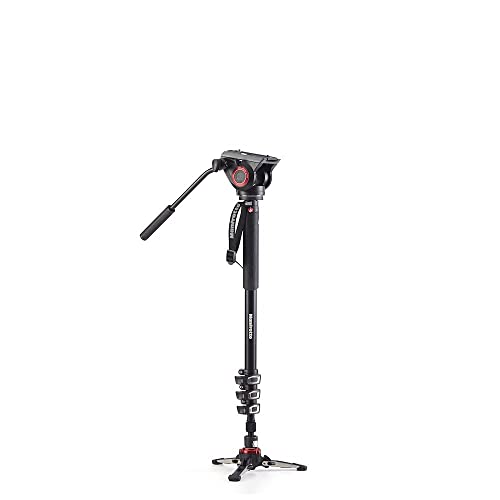
Buy the Manfrotto XPRO+ if the job is video and the camera has to see over people. At 79.9 inches it is the only pick here that shoots over a standing crowd at an event or a press line. The column is four sections of aluminium on Manfrotto’s FLUIDTECH base, the same damped three-foot idea as the Cobra. The lever locks (Manfrotto’s Quick Power Lock) free a section with a flip and work in gloves.
The cost is four locks per height change. Every adjustment means working the levers rather than pressing a button, which is why the Cobra is the overall pick and the Manfrotto is the pick for a shooter who sets a height and keeps it. Weight is the other cost. At about 4.6 lb it weighs about a pound less than the Cobra but five times as much as the Sirui. A fluid video head is in the box at $225.79, so the camera tilts independently of the column with nothing more to buy. If you can live without the base and the height, the Sirui P-326 is $88.00.
Best for stills, sports and wildlife: Sirui P-326 carbon at $88.00
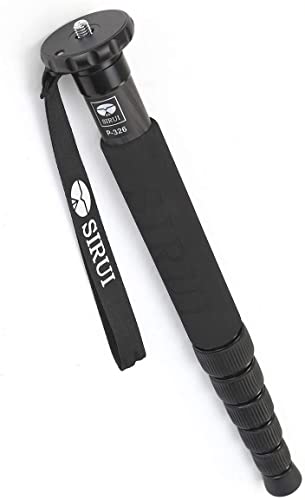
A sports or wildlife shooter carries a long lens on its collar foot for hours, and a column that weighs nothing in the hand and comes up to eye level is the whole requirement. The Sirui P-326 meets it with about a pound of carbon fibre. Its six twist-lock sections reach 60.6 inches and fold to 15.6 inches, short enough to go in a camera bag, and at $88.00 it costs less than half of either video pick.
What you give up is speed and a base. Full height is six quarter-turns away, which is fine for a shooter who sets it once at the sideline and wrong for one who changes height every minute. The rubber foot is a pivot point, so video on it looks handheld, and it will not stand on its own. If the twist locks are the sticking point, Sirui’s newer 65-inch carbon one-step monopod adds height and a single-action adjustment for $57 more, at $145 from the Sirui USA storefront. It stays the step-up rather than the pick because the P-326 is the proven model. Nothing here costs less, since $88.00 for carbon is already the floor.
FAQ
Monopod or tripod for video?
Use a monopod for anything the operator stays with and a tripod for anything left alone. A monopod with a fluid base handles pans, push-ins and run-and-gun coverage in a crowd, while a tripod handles locked-off interviews, second cameras and anything that runs longer than an operator’s attention.
Do I need a fluid head on a monopod?
Only if you want a tilt independent of the column. The fluid base under the Cobra 3 Strike and the Manfrotto XPRO+ supplies the damped pan, and leaning the column supplies the tilt. A head on top adds a second damped axis, a locked tilt angle and the quick-release plate that moves the camera to a tripod without re-rigging. The Manfrotto XPRO+ ships with one.
How tall should a monopod be?
It should be tall enough that the viewfinder reaches the eye without a bend. For a standing operator of average height that means a lens height near 60 to 65 inches, allowing for the camera and any head on top. The 59-inch Cobra and the 60.6-inch P-326 both get there with a body on top. The 79.9-inch XPRO+ is for shooting over a crowd or for an operator well over six feet.
Where this fits in the kit
The three-legged half of the decision is in best tripod for video for fluid-head kits and best travel tripod for carry-on legs. The run-and-gun documentary kit shows the Cobra in a full bag, and a phone on a stick is covered in best iPhone tripod.


