We have a whole desk streaming guide on this site, and it gets to assume something an IRL streamer never can: the internet connection stays put. Take the stream out the door and you inherit problems no desk setup has ever met. The connection dies in every parking garage, the battery has to outlast the walk, the encoder runs flat out in the sun, and at Twitch bitrates you’re pushing close to 3 GB of data an hour, which your phone plan will notice.
Most IRL streaming guides were published by a company selling the bonding service or the backpack they recommend. This one is what IRL streamers run, at three budgets, with the monthly costs nobody puts in a headline.
Last updated: July 2026. Some links below are affiliate links. Buy through them and it helps keep the site running, at no extra cost to you. Prices were verified in mid-July 2026 and will drift; camera prices in particular have been jumpy all year.
TLDR
Start at tier 1. The free apps (Moblin on iPhone, IRL Pro on Android) bond connections the way hardware ten times the price does, and a $149 mic fixes the one part of a phone stream viewers complain about. The bonded backpack in tier 3 is the endgame, and it’s a commitment: about $150 for the Belabox board, $1,000 to $2,500 built out, and the cost that stays with you is the $100 to $150 a month in SIM cards it eats whether you stream or not, which is why the phone should prove you’ll keep streaming before you buy the backpack.
Tier 1: the phone in your hand ($0 to $300)
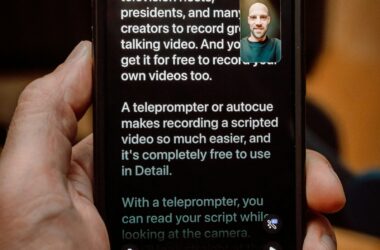
The apps are the story at this tier, because the meta shifted. On iPhone the pick is Moblin, free and open source: it streams SRT with SRTLA bonding, encodes in HEVC, and targets Twitch, Kick, or your own OBS. On Android the equivalent is IRL Pro, also free, with the same SRTLA and HEVC combination. Bonding here means the app can spread the stream across more than one connection and step the bitrate down gracefully when coverage thins, instead of dropping the stream outright. Larix Broadcaster is still around as a multi-protocol fallback, and Streamlabs’ mobile app is RTMP only with no bonding, which works parked at a coffee shop and falls apart the moment you move.
Kick’s native app deserves a sentence of its own: it streams adaptive 2,500 to 4,500 kbps, which is fine for a face camera, and it makes you set your title and category on the web dashboard before going live, a detail nobody discovers until they’re already standing on the sidewalk.
Audio is the first upgrade to buy. The Rode Wireless Micro ($149) is the simplest phone mic in the category: the receiver plugs straight into USB-C, the transmitter clips to your collar, and there’s no pairing ritual between you and working audio. If $149 is the whole budget, the DJI Mic Mini runs $79 to $99 and can even pair to the phone over Bluetooth with no receiver at all, though that route drops the audio to 16-bit; use the included receiver when you can. The up-tier is the DJI Mic 3, which hit its first sale in July 2026 at $219 for the two-transmitter kit, down from $259. Our wireless mic guide covers the whole field if you want the long version.

A gimbal is optional right up until you watch your own VOD. The Insta360 Flow 2 Pro ($159) is the pick: it supports Apple DockKit, its pan tracking rotates without limit, and the listing is first-party. DJI’s Osmo Mobile line is the usual Android answer, and its multifunction module doubles as a receiver for DJI’s mics, but Amazon stock on the current Osmo Mobile models was third-party sellers at odd prices when we checked in July 2026, so buy those from DJI directly if you go that way.

The last tier 1 item is power. Streaming pins the phone’s radio and encoder at full load, and no phone battery survives a long stream on its own. The Anker 737 PowerCore 24K (about $110) charges at 140W over USB-C PD, and its 86.4Wh capacity sits under the 100Wh airline limit, so the same bank flies with you.

Tier 2: a real camera on a hotspot ($500 to $1,200)
“When do I outgrow the phone?” When the footage does: a dedicated camera gets you better stabilization and better low light, and it frees the phone to be the dashboard for chat and stream health instead of the thing doing everything at once.
The DJI Osmo Pocket 3 is still the IRL camera, and its price has been a ride: launched at $519, pushed near $799 by tariffs and demand, and by July 2026 had settled back to a $499 street price with a $378 record low over Prime Day. If a listing wants more than $499, that’s gouging; wait a week. The Pocket 4 was announced in April 2026, but DJI landed on the FCC Covered List in December 2025, so it isn’t sold in the US and no major US retailer stocks it. For American buyers the Pocket 3 is the current model.

The GoPro Hero 13 Black ($329 to $349, down from a list of $399 to $430) is the rugged, waterproof alternative, and GoPro had pushed the Hero 14 to late 2026 as of our July 2026 check, which left the Hero 13 as the current flagship. If your streams involve water, dirt, or the occasional drop, this is the body that shrugs it off.

The Insta360 X5 ($549) is the 360 option, and 360 IRL is its own genre: you reframe after the fact or let viewers look around. The Insta360 Ace Pro 2 is the flat-lens sibling if you want Insta360’s processing without the 360 workflow. The X6 cleared the FCC on July 3, 2026 and had not shipped as of this post’s July check; our action camera guide tracks it, and the advice stands: buy the camera that ships.

All three cameras share the limitation tier 3 exists to fix: they stream by pushing a single RTMP feed through their companion app over your phone’s hotspot. No bonding, no real bitrate adaptation; one dead zone and the stream is gone. Well, mostly gone. The workaround is to point the camera’s RTMP output at Moblin or IRL Pro on the phone, which accept an RTMP source and re-send it over SRTLA, so you keep the good camera and the graceful degradation. The other workaround is an HDMI cable into a tier 3 encoder, which is exactly how these cameras end up strapped to backpacks.
Tier 3: the bonded backpack ($1,000 to $2,500 built out)
This is where IRL streaming becomes infrastructure. A bonded encoder takes your camera over HDMI, splits the stream across two to four cellular connections on different carriers, and reassembles it at a relay server, so a coverage hole on one carrier stops mattering. The Belabox build below has no affiliate links in it; the LiveU at the end does, through Adorama.
The answer is Belabox, a free open-source OS you flash onto a Rockchip RK3588 single-board computer. The boards that work are the Orange Pi 5 Plus and the Radxa Rock 5A, 5B, and 5B+, and the Rock 5B+ is the best current base: its HDMI input holds up best next to the RF noise of a bag full of LTE and 5G modems, and it takes an M.2 modem internally. The Orange Pi 5 Plus 16GB runs about $150 to $180, though it was third-party sellers only as of July 2026, so check who you’re buying from. The board is the cheap part: modems, power and the bag take a finished build to the $1,000 to $2,500 in the heading. Belabox also sells an official prebuilt, the BEE (£450, HDMI at 1080p60, four USB modem ports, H.265 encoding, 6.5W draw), in limited runs that sell out fast; EZiRL and AntiScuff (£999, about $1,250 turnkey) build prebuilts in the same spirit, and a productized derivative called IRLBox was in public beta as of July 2026. The community wiki is where the current state of all of this lives.
Modems and data are where the real money goes. A US build typically runs two to four connections through USB-tethered phones or hotspots like the Netgear Nighthawk M1 and M6 or ZTE’s 5G routers. The plan math matters more than the modem: dedicated “hotspot data” plans are priced badly, so the combos that work are Visible+ (truly unlimited hotspot with a 15 Mbps cap, which comfortably feeds one 6 Mbps leg), US Mobile (you pick Verizon, AT&T, or T-Mobile per SIM, the cheapest way to touch all three networks), and a T-Mobile line on top. A realistic multi-carrier setup lands at $100 to $150 a month, and that number doesn’t pause when you take a month off, which is why the verdict up top calls the backpack a commitment.
Power and the bag are the easy parts. The Anker 737 from tier 1 runs a Belabox fine, or step up to the Anker Prime 26,250mAh at 99.7Wh, still under the carry-on limit; the Belabox wiki keeps a compatible power bank list because some banks have USB-C PD trigger quirks. For the bag itself there’s no brand to name, and there doesn’t need to be. Any daypack you can route cables through works; space-node’s 2026 DIY guide budgets €250 to €400 for the bag portion of the build, camera excluded.
The turnkey comparison everyone asks about is the LiveU Solo PRO, $1,795 in the HDMI version or $2,595 with SDI, both at Adorama; UnlimitedIRL sells it too, along with the $450 to $995 modem kits and the $295-a-month US bonding plan. The side-by-side evidence here is unusually good for a gear argument. TheSushiDragon ran the first live LiveU-versus-Belabox comparison on Twitch and the Belabox held up; streamer nezst called the Belabox picture as good or better at half the bitrate, thanks to SRTLA and HEVC, with no overheating, running on a board that cost about $150. LiveU is the pick when a company is paying and nobody on staff wants to flash an SD card. For everyone else the Belabox does the same job for less on either basis: about $150 for the board against $1,795 for the LiveU unit, or $1,000 to $2,500 built out against $2,245 to $3,590 for the LiveU with its modem kit.
The server side: someone has to catch the stream
SRT doesn’t go straight to Twitch or Kick. Both platforms ingest RTMPS on Amazon IVS-style infrastructure, so every bonded setup needs a relay in the middle that receives the SRTLA stream and forwards it to the platform. The default answer is Belabox Cloud at $10 a month, which pairs the relay with remote control of your encoder; IRLServer, IRLHosting, and AntiScuff (from $13) sit in the same budget bracket. NOALBS, free and open source, watches your bitrate and switches OBS scenes automatically when the connection dips, and it pairs with any of them.
The premium tier is IRLToolkit, cloud-hosted OBS at $129 a month (1080p60, 7,500 kbps cap) or $179 uncapped. It’s a managed setup, and most hobbyists don’t need it. The cheapest route is the opposite: an SRTLA receiver and SRT server on a $5 to $15 VPS, which works and also makes you the person who gets paged when it breaks mid-stream. Most people land on the $10 relay.
What it costs to run
Hardware is the number in every headline and the smaller number in the budget. The all-in picture, using OutdoorIRL’s published cost breakdowns for the bonded tiers:
| Build | Hardware, one-time | Ongoing, monthly | Where the monthly goes |
|---|---|---|---|
| Tier 1: phone only | $0 to about $420 (mic, gimbal, battery) | $0 to $10 | Your existing phone plan; a relay only if you add one |
| Tier 2: camera + hotspot | Tier 1 kit plus a $329 to $549 camera (Osmo Pocket 3, Hero 13, or X5) | $0 to $10 | Same as tier 1, riding your plan’s hotspot data |
| Tier 3: Belabox DIY | $150 to $180 for the board alone; $1,000 to $2,500 built out with modems, power and bag | $110 to $300 | $100 to $150 in multi-carrier SIMs, plus a ~$10 relay |
| Tier 3: LiveU Solo PRO | $1,795 to $2,595 for the unit alone; $2,245 to $3,590 with a modem kit | $210 to $400 | The $295 LRT bonding plan, plus data |
Read the two tier 3 rows together and the comparison settles itself: by OutdoorIRL’s numbers the LiveU runs roughly $100 more every month before you count the higher hardware price, for a picture the live side-by-sides scored no better. Over a year of streaming, that gap covers a second Belabox board and a very nice camera.
Twitch vs Kick: the plumbing differences
Twitch caps standard ingest at 6,000 kbps H.264. The only path above that is Enhanced Broadcasting, which multi-encodes on your device in HEVC or AV1 and unlocks about 8 Mbps for 1080p60 and up to roughly 10 Mbps for 4K; Moblin supports it, which is part of why it’s the default app. Kick’s ceiling reads better on paper at 1,000 to 8,000 kbps, but ingest is CBR H.264 only, no HEVC or AV1, so the extra bitrate is spent on a less efficient codec, and Kick’s own mobile app self-caps at 2.5 to 4.5 Mbps anyway. In practice the two platforms look closer than the spec sheets suggest. Both ride the same style of RTMPS ingest, both need a relay for SRT, and nothing in the hardware above is platform-specific: pick the platform for the audience, not the encoder.
What matters when you’re choosing
Ranked by how often each one ends streams: connection handling first (SRTLA bonding, or at minimum graceful bitrate adaptation), battery second, heat third, camera quality a distant fourth. Viewers forgive soft footage; they leave frozen streams. And price the monthly before the hardware. A $150 Belabox board ($1,000 to $2,500 once it’s built out) with $150 a month in SIMs costs more in its first year than a $549 camera running on the plan you already pay for.
FAQ
What internet do you need to IRL stream?
A sustained 6 Mbps of upload covers 1080p at Twitch’s standard cap. The problem is never the average, it’s the holes: one carrier delivers that most of the day, then hands you nothing in a basement or a crowd. That gap is the entire case for bonding, and it’s why a capped-but-unlimited plan like Visible+ at 15 Mbps still works fine as a single leg.
Can you IRL stream with just a phone?
Yes, and most people should start there. Moblin and IRL Pro are free and handle bonding and HEVC on hardware you already own. A clip-on mic like the Wireless Micro is the one purchase that changes how the stream feels, and the two-phone meta (one phone streams, a second runs chat) costs nothing if you have an old phone in a drawer.
Belabox or LiveU?
If you’re the one paying, Belabox. The live side-by-sides give it equal or better picture, the hardware is cheaper on either basis (about $150 for the board or $1,000 to $2,500 built out, against $1,795 for the LiveU unit alone), and the service gap ($10 a month against $295) settles the rest. The LiveU case is corporate: someone else’s budget, vendor support on the phone, and nobody on staff flashing SD cards.
Is Kick technically different from Twitch?
Less than the marketing suggests. Kick allows up to 8,000 kbps but only in CBR H.264, while Twitch’s Enhanced Broadcasting reaches similar effective quality through HEVC and AV1. Ingest and the SRT relay requirement work the same way on both, and the hardware on your back doesn’t change. The one Kick-specific quirk worth remembering: set your title and category on the web dashboard before you go live from mobile.
In conclusion
And that’s the whole ladder: a free app, then a camera, then a backpack that turns you into a small broadcast truck. I cut footage for a living and nobody wants to watch me walk to the coffee machine, so I haven’t run any of this myself. The evidence is public, from the Belabox wiki to the streamers running side-by-sides on their own channels, and the picks above are where it leads. Start at tier 1, let the VODs tell you when you’ve outgrown it, and only sign up for the monthly data bill once you know you’ll use it. If you’re weighing a build or arguing with one of these picks, leave a comment.