The beginner’s streaming cart usually ends up full of gear that solves problems they don’t have. The actual setup is a short chain: a camera, a way to get its signal into the computer, a microphone, a light, something to control it all, and software to encode the stream. Six links. Your stream looks and sounds like the worst one.
This guide walks that chain link by link, with a pick at each budget and a note on what you can skip. The short version: the best streaming software is free, the current mirrorless pick needs no capture card, and roughly $400 of hardware covers what most streamers put on screen. The upgrades past that are real, but each solves a specific problem, and you should know which one before you pay for it.
Scope note: this is the desk and studio guide, the setup that stays plugged into a wall. Streaming from the street or a car is a different chain with different failure points, covered in the companion IRL streaming setup guide.
Last updated: July 2026. Some links below are affiliate links. Buy through them and it helps keep the site running, at no extra cost to you. Prices were verified on July 17, 2026, and they will drift, so read every number as “around this much at the time of writing.”
TLDR
The starter chain is a Elgato Facecam MK.2 at $139.99, an Elgato Wave:3 MK.2 at $169.99, and an Elgato Key Light Neo at $89.99, with OBS Studio doing the encoding for free. That’s $399.97 for a stream that looks and sounds professional. The step-up is a Sony ZV-E10 II at around $999, which plugs straight into USB as a webcam, no capture card required. For multi-cam, the Blackmagic ATEM Mini Pro at $345 handles switching and capture in one box.
The camera, tier one: webcams got good
For years the webcam was the compromise you apologized for. The current generation ended that.
The webcam pick: Elgato Facecam MK.2
The Facecam MK.2, at $139.99, sends uncompressed 1080p60 over USB, which matters: the image OBS receives is the image the sensor saw, not a compressed copy with the detail smeared out. Camera Hub gives you manual exposure, white balance, and framing that persist between sessions. It has no built-in mic, which costs you nothing, because the mic is its own link in the chain and no webcam mic was ever going to be it.

The 4K step-up: Elgato Facecam 4K
The Facecam 4K is the newer body (2025) at $199.99, built on a Sony STARVIS 2 sensor with 4K60 output and a 49mm filter thread on the front, so a mist or ND filter screws straight on like it would on a real lens. It dips to $159.99 in Elgato’s promos often enough that waiting a week or two usually pays.

The tracking alternative: Insta360 Link 2
If you move between a desk, a whiteboard, and a standing rig, the Insta360 Link 2 at $195.99 puts a 1/2-inch sensor on a pan-tilt gimbal with AI tracking that follows you around the frame. The Link 2C is the same camera without pan and tilt at $149.99, and a Link 2 Pro bundle exists at $249.99, but the standard Link 2 is the one to buy. If you sit still, the Facecams give you more image for the money.

The camera, tier two: mirrorless over one USB cable
The mirrorless step-up used to mean a capture card and an HDMI cable taped along the desk. The Sony ZV-E10 II, around $999 for the body, deletes most of that. It streams over plain USB as a standard UVC/UAC webcam: one cable, no capture card, no drivers. The clean HDMI output is still there for the day you outgrow USB and move to a switcher, and if you want more camera than this for the same desk, the next rung is our best cameras under $2,000 roundup.
Two accessories finish the rig. The FZ100 battery holds up for normal sessions; for all-day streaming, an NP-FZ100 dummy battery AC coupler (around $30 from the usual third-party brands) runs the camera off the wall. And a ProGrade V90 SD card lets you record a local backup in camera, a clean master file that never touched the stream encoder.
On glass: at desk distance the Sony E 15mm f/1.4 G is the natural pick, wide enough to frame you at arm’s length with the aperture to blur the room behind you. If the camera also shoots your B-roll and sit-down videos, the Sigma 18-50mm f/2.8 covers more jobs with one lens.

Capture and switching: only buy this if your chain needs it
A capture card turns HDMI into something USB understands. You need this section in exactly two cases: a camera that only outputs HDMI, or more than one camera. If your camera is a webcam or a UVC mirrorless, skip ahead.
The single-camera pick: Elgato Cam Link 4K
The Cam Link 4K has been the correct answer to “HDMI camera into OBS” for years, and at $99.99 it now sells below its old $129 list. Plug the camera’s HDMI into it, plug it into USB, and the camera appears as a webcam. You’ll also want a micro-HDMI to HDMI cable, since that’s the port most hybrid bodies carry; any reputable cable works.

The multi-cam pick: Blackmagic ATEM Mini Pro
The moment a second angle enters your stream, the ATEM Mini Pro at $345 is the working answer. It takes four HDMI inputs, cuts between them on hardware buttons, and hands your computer a single finished program feed. Two notes from our price check: the Amazon buy box is a third-party seller (SolidSignal) at $345, which matches the authorized price at the big camera retailers, so it’s the going rate. And the base ATEM Mini has left the lineup; the ladder now runs Pro $345, Pro ISO $575, Extreme $1,225, Extreme ISO G2 $2,195. The Pro ISO is the one upgrade with a post-production argument: it records each input separately for a proper edit after the stream.

The microphone: viewers forgive soft video, not bad audio
The USB pick: Shure MV7+
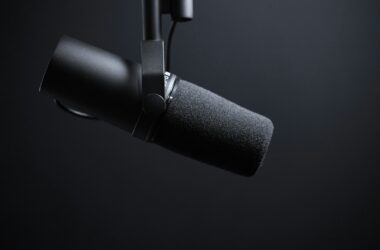
The Shure MV7+ at $299 is the streaming mic to buy because its onboard DSP is OBS-certified, so leveling and processing happen in the mic, where nobody is riding a fader mid-stream. It carries both USB-C and XLR outputs, so it survives the day you buy an interface instead of becoming a drawer item. That’s the argument for spending $299 once instead of $150 twice.

The value picks: Elgato Wave:3 MK.2 and Samson Q2U
The Wave:3 MK.2 shipped in March 2026 at $169.99 with a new Wave FX processor and Clipguard 2.0, which catches sudden peaks (a laugh, a rage moment) before they clip. The original Wave:3 is superseded, and while old stock sells through, the discounts on it are real money for the wrong mic. At the budget floor, the Samson Q2U at around $70 remains the classic first mic, with USB and XLR outputs both on board.

The XLR lane: Shure SM7dB plus an interface
If your stream is a show with a sound you’re building, XLR is the lane with headroom. The Shure SM7dB, around $499, is the broadcast standard with a built-in preamp, which retires the old routine of buying a classic SM7B and then a booster to feed it. The budget XLR entry is the Rode PodMic USB at around $199, which covers both connections the way the MV7+ does.
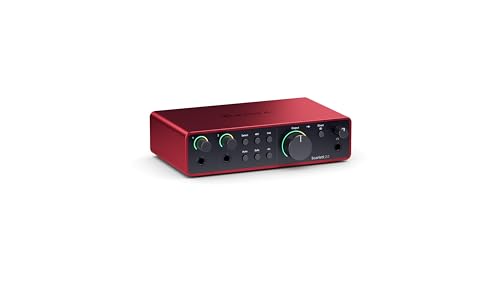
For the interface, the Focusrite Scarlett 2i2 4th Gen at around $199.99 is the default two-channel box, or the MOTU M2, the equally common alternative. For physical faders and a second headphone out for a co-host, the RodeCaster Duo is the console lane. Elgato also shipped a Wave XLR MK.2 at $169.99 shortly before our July price check, and it had no stable listing then. And if your content leaves the desk for interviews, that’s lavalier territory: see our wireless mics guide.

The boom arm: Rode PSA1+
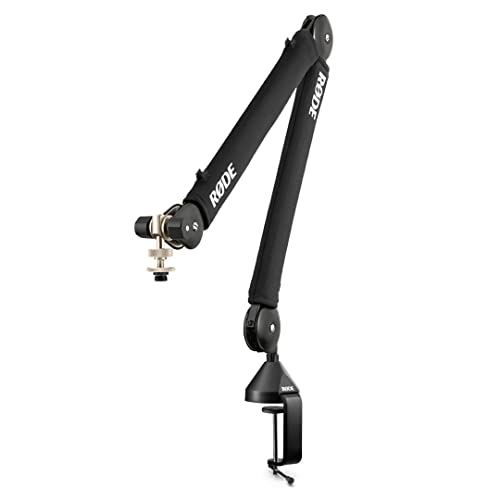
Every mic above sounds better six inches from your mouth than two feet away on a desk stand, and the arm is what makes six inches livable. The Rode PSA1+ at $106.40 is the studio standard: it holds position silently, keeps the mic off a desk you will absolutely bump mid-stream, and swings out of frame afterward.
The light: the cheapest image upgrade on this page
A $90 light improves your image more than a $200 camera swap. The desk pick is the Key Light Neo at $89.99: USB-C powered, fanless so it gives your microphone nothing to pick up, and it lives inside the Stream Deck ecosystem, so the light comes up with the rest of your going-live macro. Elgato doesn’t publish a CRI figure for it, so the ecosystem and the silence are what you’re paying for. Skip the original Elgato Key Light; it was unavailable on Amazon at our July check, and the replacement MK.2 sells only direct.
If color accuracy on skin matters to you, or the frame grows past a webcam crop, the step-up path is covered in our key lights for talking-head video guide, where the Amaran Verge takes the desk tier on published spectrum and focusing lights like the Aputure LS 60x handle the dramatic end.

Control and software: the free part is the good part
The controller: Elgato Stream Deck MK.2
Live production has no undo, and the Stream Deck MK.2 at $149.95 exists to keep your hands off the OBS window while you’re on camera. Fifteen keys handle scene switches, mute, the key light, and whatever macros your show settles into. If audio mixing is half your job, the Stream Deck + at around $199 trades some keys for four physical dials. The budget entry is the Stream Deck Neo at $99, and a 36-key Stream Deck + XL arrived in March 2026 at $349.99 direct from Elgato. None of this is required equipment; hotkeys do the same jobs free, just with a visible alt-tab.

The software: OBS Studio, and it’s free
OBS Studio is the industry default, running somewhere around 60 to 70 percent of top streams, and it costs nothing. It’s also lighter on the CPU than Streamlabs at identical NVENC settings, which matters when your encoder shares a machine with a game or an NLE. Streamlabs is the same engine wrapped in beginner-friendly overlays, and Ecamm Live is the paid Mac-native option. For a desk setup, none of them beats free OBS.
How the picks compare
| Product | Slot in the chain | Why it’s the pick | Price (7/17/26) |
|---|---|---|---|
| Elgato Facecam MK.2 | Camera (webcam) | Uncompressed 1080p60, manual controls that persist | $139.99 |
| Elgato Facecam 4K | Camera (webcam, 4K) | STARVIS 2 sensor, 4K60, 49mm filter thread | $199.99 |
| Insta360 Link 2 | Camera (tracking) | PTZ gimbal with AI tracking, 1/2-inch sensor | $195.99 |
| Sony ZV-E10 II | Camera (mirrorless) | UVC webcam over plain USB, clean HDMI for later | ~$999 (body) |
| Elgato Cam Link 4K | Capture (single cam) | HDMI in, webcam out, no drama | $99.99 |
| Blackmagic ATEM Mini Pro | Switcher (multi-cam) | Four HDMI inputs, hardware cuts, one program feed | $345 |
| Shure MV7+ | Microphone (USB pick) | OBS-certified DSP, USB-C and XLR both | $299 |
| Elgato Wave:3 MK.2 | Microphone (value) | Wave FX processing, Clipguard 2.0 | $169.99 |
| Elgato Key Light Neo | Light | Fanless, USB-C, Stream Deck integration | $89.99 |
| Elgato Stream Deck MK.2 | Control | 15 keys for scenes, mute, and lights | $149.95 |
| Rode PSA1+ | Mic arm | Silent positioning, isolates desk bumps | $106.40 |
What to look for: the signal chain, explained
UVC is the spec that saves you $100. UVC (USB Video Class, with UAC as its audio sibling) means a camera presents itself to the computer as a standard webcam, without drivers or capture hardware. It’s why the ZV-E10 II needs nothing between it and OBS. A camera with only HDMI out needs a capture device; a UVC camera needs a cable.
Live audio has no second take. In recorded work you’d fix a clipped peak in the edit; on a stream, whatever hits the encoder is what the audience hears. That’s why onboard DSP (the MV7+’s OBS-certified processing, the Wave’s Clipguard 2.0) is worth the money here: it’s the only fader-riding your stream gets. The mic arm matters for the same reason, since consistent distance is consistent level.
Light is the multiplier on everything upstream. Every camera in this guide produces its cleanest image with a lit face and its noisiest in a dim room. Spend on the light before the camera step-up; a lit webcam beats an unlit mirrorless on most streams, and the viewer on a phone can’t tell sensor sizes apart anyway.
Your upload connection is a link in the chain too. The stream needs sustained upload bandwidth, not the download number your provider advertises. Check your tested upload figure against the bitrate you plan to stream at and leave comfortable headroom, because a merely adequate connection turns into dropped frames the moment anything else on the network wakes up. Put the streaming machine on wired ethernet.
FAQ
Do I need a capture card to stream?
Only if your camera speaks HDMI and nothing else, or you’re switching between cameras. Webcams connect over USB by definition, and a UVC mirrorless like the ZV-E10 II does the same. For one HDMI-only camera, the Cam Link 4K is the answer; for several, the ATEM Mini Pro absorbs the capture job into the switcher.
What internet speed do I need to stream?
Enough upload bandwidth to carry your planned bitrate with headroom; the signal chain section above covers how to check it. If the margin is thin, a stable 720p stream reads more professional than a 1080p stream that drops frames.
Is a real camera better than a webcam for streaming?
Eventually, yes: a bigger sensor and a fast lens produce depth and low-light performance no webcam matches. Light a Facecam MK.2 properly first, though, then decide whether the camera is still the weak link.
Is OBS really good enough, or should I pay for streaming software?
OBS is enough: the paid alternatives don’t encode a better picture, and it’s what most top streams already run. Pay for software when you need a specific feature it has, like Ecamm Live’s Mac-native workflow.
Do I need a Stream Deck to start streaming?
No. Hotkeys in OBS handle scene switching and mute for free, and plenty of streams run that way for months. The Stream Deck MK.2 is worth its $149.95 once your show has enough moving parts that fumbling on camera costs more than the hardware does. Start without it.
Build the chain once, then go live
And that’s the chain. The pattern worth keeping: spend where your setup is weakest, and skip the links your chain doesn’t have. Your room and your content get the final vote on any of it. If you’re weighing a piece of it, leave a comment.
If your streaming happens away from a desk, the IRL streaming setup guide is the mobile half of this story. For deeper dives on single links in the chain, start with our key lights guide; the rest of the buyer’s guides live on the Gear Guides page.