There are two kinds of box in this guide, and they solve the same problem from opposite ends. A field recorder captures clean sound out where the action is, away from the camera. An audio interface captures clean sound at your desk, into a computer. What ties them together for a hybrid creator is one feature worth understanding before you spend a dollar: recordings you almost can’t ruin.
The headline is 32-bit float, and it’s the rare spec that lives up to its hype. In a normal recording, audio that peaks too hot clips, and clipped audio is just gone; no plugin rebuilds a flat-topped waveform. A 32-bit float recorder keeps the whole waveform even when the level slams into the ceiling, so the take that died on set comes back to life when you pull the gain down in your editor. I do this on my timeline more often than I’d like to admit. The first time it saves a good take, the recorder has paid for itself. And the bigger win is what it does to your shoot: you stop riding levels on set and normalize once, calmly, in post.
So the guide is organized by which end of the problem you’re solving: recorders first, interfaces second, and one crossover box for people doing a bit of everything. It also spends real time on timecode and the file handoff, because that’s the half of the story the spec sheets never tell.
Last updated: July 2026. Some links below are affiliate links. Buy through them and it helps keep the site running, at no extra cost to you. One note: the capture-to-timeline handoff, timecode, sync, file management, is my day job, so that’s first-hand. The specific units are research, verified against current US stock and pricing in mid-July 2026. Prices drift, so check before you buy.
TLDR
If you just want the answer: for clean dialogue in the field with XLR mics you own or plan to own, get the Zoom F3. If you want the cheapest possible way to never miss a level, the Zoom H1essential is a hundred dollars and does the one magic trick. For voiceover at a desk, the Focusrite Scarlett 2i2 is the safe, no-drama interface, and the MOTU M2 is the pick if what you care about is clean sound and metering you can read at a glance.
Best field recorder: Zoom F3
The F3 is the recorder I’d point most creators at for serious dialogue. Tiny body, two locking XLR/TRS inputs with switchable phantom power, and a dual-converter design that writes true 32-bit float: set a rough level and stop thinking about it. The preamps are quiet, which matters more than any headline spec when a soft voice is coming down a lav. This is the “clip a lav on someone, hit record, fix it later” box.
Two caveats. There are no built-in microphones, so the F3 is for people feeding it XLR or TRS mics, not a grab-and-go with its own capsules. And timecode isn’t built in either; you add it with Zoom’s TCA-1 adapter or a Bluetooth sync box, which is extra money if frame-accurate multicam sync matters to you. For clean two-channel dialogue at around $349, though, nothing at the price is as trustworthy. It’ll even stand in as a USB interface when you’re back at the desk.

Best pocket recorder: Zoom H1essential
The H1essential is the cheapest on-ramp to 32-bit float. Built-in stereo mics, float recording up to 96 kHz, a 3.5mm input, and a plug-and-play USB mic mode. This is the recorder you throw in the bag for room tone, ambience, scratch audio, a backup track, or a quick voiceover, and at around $100 owning one is close to a no-brainer even if it never becomes your main rig.
What you don’t get: XLR inputs, phantom power, or a premium build. It’s plastic, and it feels it. But it does the one thing that matters, capturing audio you can’t easily wreck, for less than a decent cable budget. As a second recorder or a beginner’s first, it punches way above its number.

The wildcard: Tascam FR-AV2
The FR-AV2 was built for exactly this audience: hybrid shooters who need sound to sync to picture. Two XLR/TRS inputs, phantom power, 32-bit float like the F3, and then the trick: a built-in timecode generator that reads and jam-syncs to other boxes. Frame-accurate multicam sync without buying a separate Tentacle or UltraSync unit, in a body designed to live on a camera rig.
The flags: it’s newer than the Zoom line, so there’s less years-in-the-field history behind it, and at around $429 it’s priced right against an F3 plus a timecode adapter. So the decision is simple: timecode native, or timecode added on. If multicam or camera-sync work is your normal week, the built-in generator earns the premium and saves setup time on every shoot. Weigh this one against the F3, not against the pocket recorder.

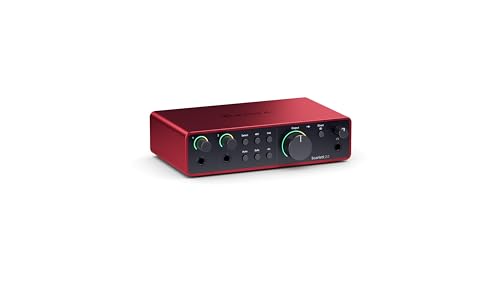
Best desktop interface: Focusrite Scarlett 2i2 4th Gen
The Scarlett 2i2 is the interface I’d hand most people recording voiceover at a desk, because it’s boring in the best possible way. Two combo inputs, phantom power, clean preamps, drivers that never make the news, and the two features that help a solo creator: Clip Safe, which rescues a take that ran hot, and Auto Gain, which sets a sane level from a test read. That’s the desk-side version of the 32-bit float safety net, and it deletes the most common beginner mistake outright.
The preamps are clean and neutral rather than characterful, and there’s no onboard DSP. For spoken word, that’s the right call: you want the mic and the room, not color from a box. At around $180 with the best onboarding software in the class, it’s the default for a reason. Pairing it with a gain-hungry mic like an SM7B? Check the headroom math first. For most voiceover mics it has plenty.
Best value interface: MOTU M2
The M2 is for people who want the cleanest sound and the clearest metering at the price. It runs the same class of ESS converters you’d find in far pricier gear, so the outputs and headphone amp are unusually transparent, and the front panel has full-color level meters you can read at a glance, no software staring required. If you trust your own gain-staging, that visibility is worth a lot.
There’s no Clip Safe or Auto Gain equivalent here, and the bundled software is thinner than Focusrite’s, so the M2 asks a little more of you in exchange for the cleaner signal path. At about $190 it’s priced right on top of the Scarlett, so the choice is character: the Focusrite holds your hand, the MOTU gets out of the way. Universal Audio’s Volt 2 is the third door if you want a little vintage warmth baked in.

The all-in-one: Rode RodeCaster Duo
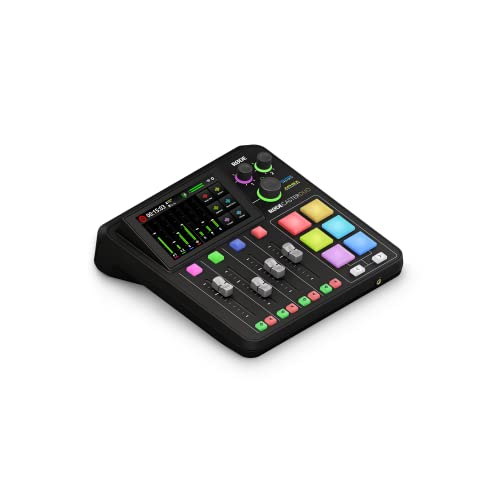
The RodeCaster Duo is for the creator whose “audio” job is really three jobs: voiceover, podcast, and stream. It’s a touchscreen production desk with two good mic preamps and onboard compression, EQ, a noise gate, and a de-esser, all running on the box’s own hardware instead of your computer’s CPU, plus multitrack USB, Bluetooth, and sound pads. When your machine is already sweating a video encode, pushing the audio processing onto a dedicated box is a real workflow win.
The catch: it’s overkill, and overpriced, if all you do is record solo voiceover. A plain interface does that job for a third of the money. At around $449 the Duo is worth it only when you’re running a mixed production; then it replaces two or three boxes on your desk. If that’s not you, buy the Scarlett or the MOTU and spend the difference somewhere it shows.
How they compare
| Unit | Price | Type | Inputs | 32-bit float | Timecode |
|---|---|---|---|---|---|
| Zoom F3 | ~$349 | Field recorder | 2x XLR/TRS | Yes | Add-on (TCA-1) |
| Zoom H1essential | ~$100 | Pocket recorder | Built-in + 3.5mm | Yes | No |
| Tascam FR-AV2 | ~$429 | Field recorder | 2x XLR/TRS | Yes | Built-in generator |
| Focusrite Scarlett 2i2 | ~$180 | Interface | 2x combo | No (Clip Safe) | No |
| MOTU M2 | ~$190 | Interface | 2x combo | No | No |
| Rode RodeCaster Duo | ~$449 | Production desk | 2x XLR + DSP | No | No |
What to look for
Match the box to where you record. Sound happens away from your desk, on location, on a subject, out in the world? Field recorder. Sound happens at a desk, into a computer? Interface. You might need both, and that’s fine. Just don’t buy a field recorder to sit on a desk, or an interface to ride around in a field bag. The RodeCaster is the one deliberate exception, a desk that tries to be everything.
32-bit float is a field-recorder feature, and it’s the one to prioritize there. It removes the single worst on-location failure, the clipped, unrecoverable take, by keeping the whole waveform no matter how hot the level runs. On the desk side, the equivalent safety net is Clip Safe or Auto Gain like the Scarlett’s. Either way, buy the version of “you can’t ruin the level” that fits where you record.
Decide whether you need timecode before you pay for it. One camera and one recorder synced by waveform in your editor is quick and reliable. No timecode required. Timecode starts mattering on multicam, on interviews that run past a card change, and on multi-day projects synced in batches. If that’s your work, the FR-AV2’s built-in generator saves you a separate box. If it isn’t, the F3 without the timecode adapter is the better value.
Plan for the file handoff, because float files are big. A 32-bit float recording is roughly twice the size of a standard 24-bit file, and a few older or free tools still choke on the format. Fold the recorder’s files into your project’s audio folder during the same offload session as the camera media, never later, and confirm your editor reads float natively (Resolve and Premiere both do). Ten minutes of discipline at ingest keeps every take clean and findable. The on-set data kit covers the offload side in more depth.
FAQ
Field recorder or audio interface, if I can only buy one?
Buy for where your hardest audio happens. If the tough recordings are on location, interviews, run-and-gun, anything away from a desk, get the field recorder; a laptop and a USB mic can cover desk work in a pinch. If you mostly record voiceover sitting down, get the interface first. Trying to serve both jobs with one box is how a field recorder ends up living on a desk, gathering dust.
Is 32-bit float worth it?
For anyone recording without a dedicated sound person, yes. It matters most exactly when nobody is watching the meters, which is the definition of shooting solo. It won’t fix a badly placed mic, a noisy room, or reverb. It fixes levels, period. But blown levels are the failure that kills otherwise good takes, and float makes that failure nearly impossible. Insurance, not magic.
Will these work with my SM7B or other hungry mic?
The field recorders here have quiet, capable preamps that drive most mics without complaint. On the interface side, a very quiet mic like the SM7B wants lots of clean gain or an inline booster; the Scarlett and MOTU both cover most mics fine, but run the numbers on the hungriest ones before you buy. Our voiceover mic guide covers which mics need the extra help and which don’t.
Do I need timecode for a single-camera setup?
No. With one camera and one audio source, waveform sync in Resolve or Premiere lines everything up in seconds and gets it right nearly every time. Timecode is for when the waveform method starts to strain: several cameras, long runs, batched multi-day syncs. Buy the timecode-native recorder when that’s your normal work. Not before.
Buy for the take you can’t redo
Match the box to where you record, prioritize the “you can’t ruin the level” feature that fits, and only pay for timecode when your work asks for it. For most creators that’s the Zoom F3 in the bag and a Scarlett 2i2 on the desk, with the pricier boxes waiting for the work to grow into them.
The neighbors are worth a click: the voiceover mic guide for what to plug into a desk interface, the wireless mic guide for the lav feeds these recorders love, and the on-set data kit for the offload and backup half of the job. As always, these are the boxes I’d trust a shoot to; your work and your budget get the final vote. The rest of our buyer’s guides live on the Gear Guides page.