Somewhere around hour six of a dialogue pass, headphones stop being audio equipment and become the room you live in. And yet when editors go shopping for a pair, the advice they find was written for someone else entirely: audiophile lists that want you in $1,500 open-backs with a dedicated amp, producer lists about mixing an 808 at 2 a.m. Your day is different. It’s the same 40 seconds of dialogue on loop, deciding whether that breath stays in, whether the room tone matches across the cut, whether the client will hear the air conditioner you’re praying they won’t. That job has its own requirements, and almost nobody writes for it.
So here’s the guide I wish someone had handed me years ago. Six pairs of cans, each with a specific job in an edit suite, all of them drivable straight from a laptop jack or an interface with zero extra hardware. And one structural rule that sorts the whole category before we talk about a single model: closed-back for the edit bay, open-back only for a quiet mix room. Closed backs isolate you from the world and the world from your mic. Open backs leak both ways and image better for it. Know which room you’re in and half the decision is made.
Last updated: September 2026. Some links below are affiliate links; buying through them supports the site at no cost to you. Every price here was checked on the live listing on September 13, 2026. Check before you buy.
TLDR
If you just want the answer: the Beyerdynamic DT 770 Pro in the 80 ohm version ($179.99) is the best all-day editing headphone for most people, and the version question matters more than the brand question… more on that below. On a budget, the Sony MDR-7506 ($113) is the pair already hanging on a hook in half the post houses in LA, and there’s a reason it never left. If you’re mixing all day and want the modern successor to that sound, Sony’s MDR-M1 ($268) fixes the two things the 7506 got wrong.
The picks
Best overall: Beyerdynamic DT 770 Pro (80 ohm)
The DT 770 Pro has been the default answer in edit bays for two decades, and the 2026 answer is the same, with one instruction attached: buy the 80 ohm version. Beyerdynamic sells this headphone in three impedances, and the internet has confused people about it for years. The 250 ohm version needs a proper headphone amp to reach level; plugged into a MacBook it sounds polite and quiet, and you’ll wonder what the fuss was about. The 80 ohm version runs loud and correct from a laptop jack, a camera, a USB interface, anything. Same driver family, same build. Unless you own an audio interface with a real amp stage and never leave your desk, the 80 ohm is the one.
What you get for $179.99: closed-back isolation that keeps a shared office out of your dialogue pass, velour pads you can wear into hour nine without your ears sweating, and a slightly lifted treble that makes edit points, breaths, and sibilance easy to find. The pads are replaceable for cheap, which matters, because a good pro headphone is a ten-year purchase where the pads are the consumable and the driver just keeps going.
Two downsides. The cable is a 3 meter coiled thing and it’s not detachable, so treat the strain relief kindly. And the same treble lift that helps you find a bad edit will flatter your mix a little… check anything treble critical on a second source before it ships.

Best on a budget: Sony MDR-7506
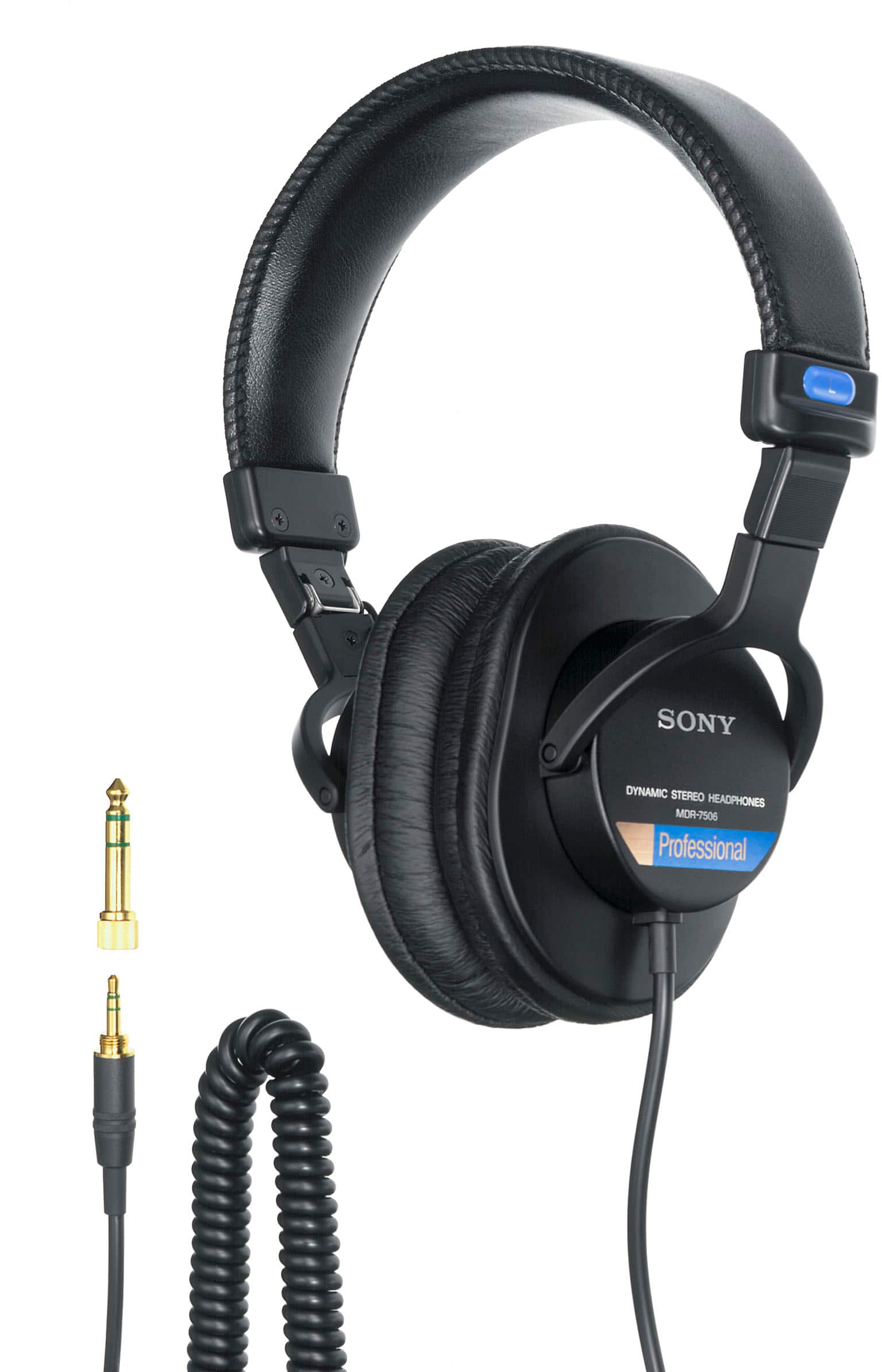
The MDR-7506 has been in continuous production since 1991, and it is still the single most common headphone in professional video. Walk into a broadcast truck, a university edit lab, a mix stage’s machine room: there it is, hanging on a hook, pads flaking, still working. That ubiquity is a real argument. When you cut on a 7506, you’re hearing roughly what the mixer who gets your timeline will hear on theirs, and what the last thirty years of broadcast was checked on.
Sonically it has a peak in the 8 to 10kHz range that works like a magnifying glass for editors. Sibilance jumps out. Bad edits jump out. The breath the lav caught between takes jumps out. For a dialogue pass, that’s a feature. For a full day of listening, it’s fatiguing, which is the main reason the step-up picks below exist. It’s light, it folds into a coat pocket, it runs from anything (63 ohms), and it’s $113 on Amazon, sold by Amazon itself.
Two things to know before you buy. The stock pads will flake and shed within a couple of years; a $15 set of replacement pads fixes it and half the pros I know upgrade the pads on day one. And the cable is coiled and captive, same caveat as the Beyerdynamic. At this price, with this track record, neither one changes the verdict. The 7506 and the internet’s other default, the ATH-M50x, go head-to-head in Sony MDR-7506 vs Audio-Technica ATH-M50x.
The step-up: Sony MDR-M1
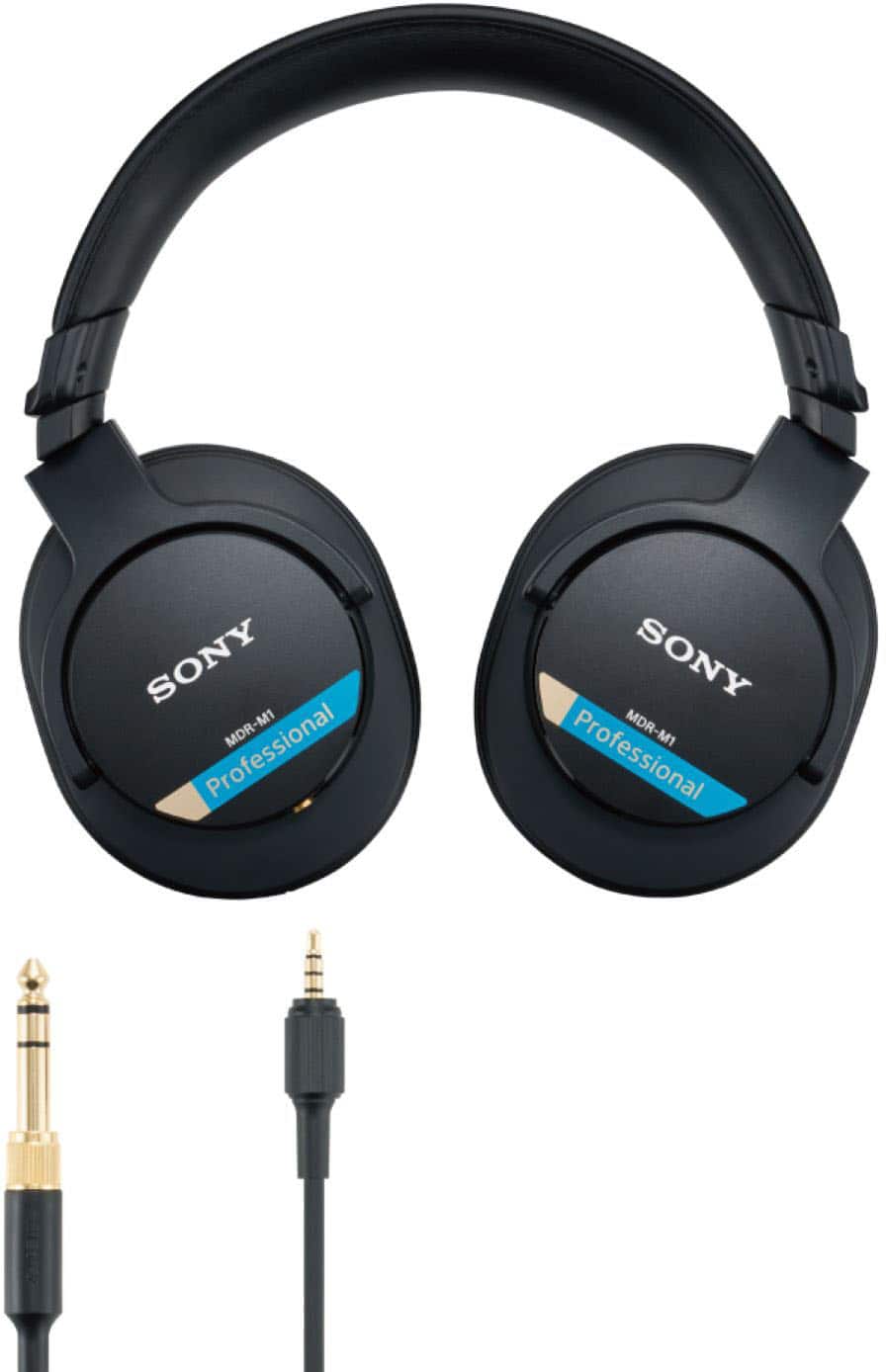
Sony finally built the 7506’s successor, and the MDR-M1 is what thirty years of feedback looks like when someone acts on it. The cable detaches. The pads are deeper and your ears sit inside them instead of against them. And the treble that made the 7506 forensic but tiring has been smoothed into something you can listen to from the first coffee to the color review without your ears waving a white flag. It keeps the things that made the 7506 a fixture: light, rugged, repairable, easy to drive at 50 ohms.
The way to think about the pair: the 7506 is the magnifying glass, the M1 is the reading glasses. If your day is finding problems in dialogue, the cheap one is the sharper scalpel. If your day is eight hours of mixing, leveling, and music decisions, the M1’s smoother top end is worth every dollar of the difference. At $268 at Best Buy it’s back at list, and it’s still the version of this purchase I’d make in 2026.
Best for long sessions: Rode NTH-100
Comfort is a spec. Nobody prints it on the box, but by hour six it’s the only spec you can feel, and the NTH-100 wins it. Rode filled the earpads with a cooling gel, kept the clamp light, and put little locking sliders on the headband so the fit you dialed in stays dialed. The result is a headphone you stop noticing, which for an editor is the entire job description.
The sound is smooth and slightly polite: nothing hyped, nothing forensic, a tuning built for hearing a voice as a voice. It won’t expose a de-esser mistake as fast as the 7506, and at $134 it isn’t the last word in accuracy for the money either. But it’s closed-back, it runs from anything at 32 ohms, the cable detaches and can enter either earcup, and every part of it is replaceable. If your complaint about headphones has ever been about your ears and not your audio, start here.

For the quiet mix room: Sennheiser HD 490 Pro
Everything above is closed-back, because most editors work in rooms with other people, other noises, and sometimes a live mic. If you have a quiet, private room and you make real mix decisions in it, one open-back pair will teach you things about your timelines that no closed can will. Open backs don’t pressurize your ear against a sealed cup, so reverb tails, stereo placement, and the balance between dialogue and a music bed all present the way they do on speakers. The trade is absolute: they isolate nothing, and everyone near you gets to enjoy your program audio too.
The HD 490 Pro is the one to buy. It ships with two sets of pads that change the tuning (the fabric pair is the neutral mixing set… use those), the cable detaches, and the staging is wide and stable enough to make panning decisions with confidence. It’s 130 ohms on paper, but it’s a sensitive 130 and runs fine from an interface or a recent laptop. Street price is $349.04 on Amazon, sold by Amazon. The clamp is firm out of the box and relaxes over the first couple of weeks; that’s normal, don’t return them at day three.
One warning, because it will bite someone: never wear open backs near a hot mic. A VO session with open backs is a feedback loop with extra steps.

The wireless question: Sony WH-1000XM6
“Can I just edit on my nice Bluetooth headphones?” You can scrub and assemble on them, and for two specific jobs they’re the right tool. But you can’t mix on them, and it’s worth being precise about why. Bluetooth adds latency that puts the audio a beat behind your timeline cursor, and noise-canceling headphones run their sound through processing tuned to be pleasant, not truthful. Your mix decisions inherit both problems.
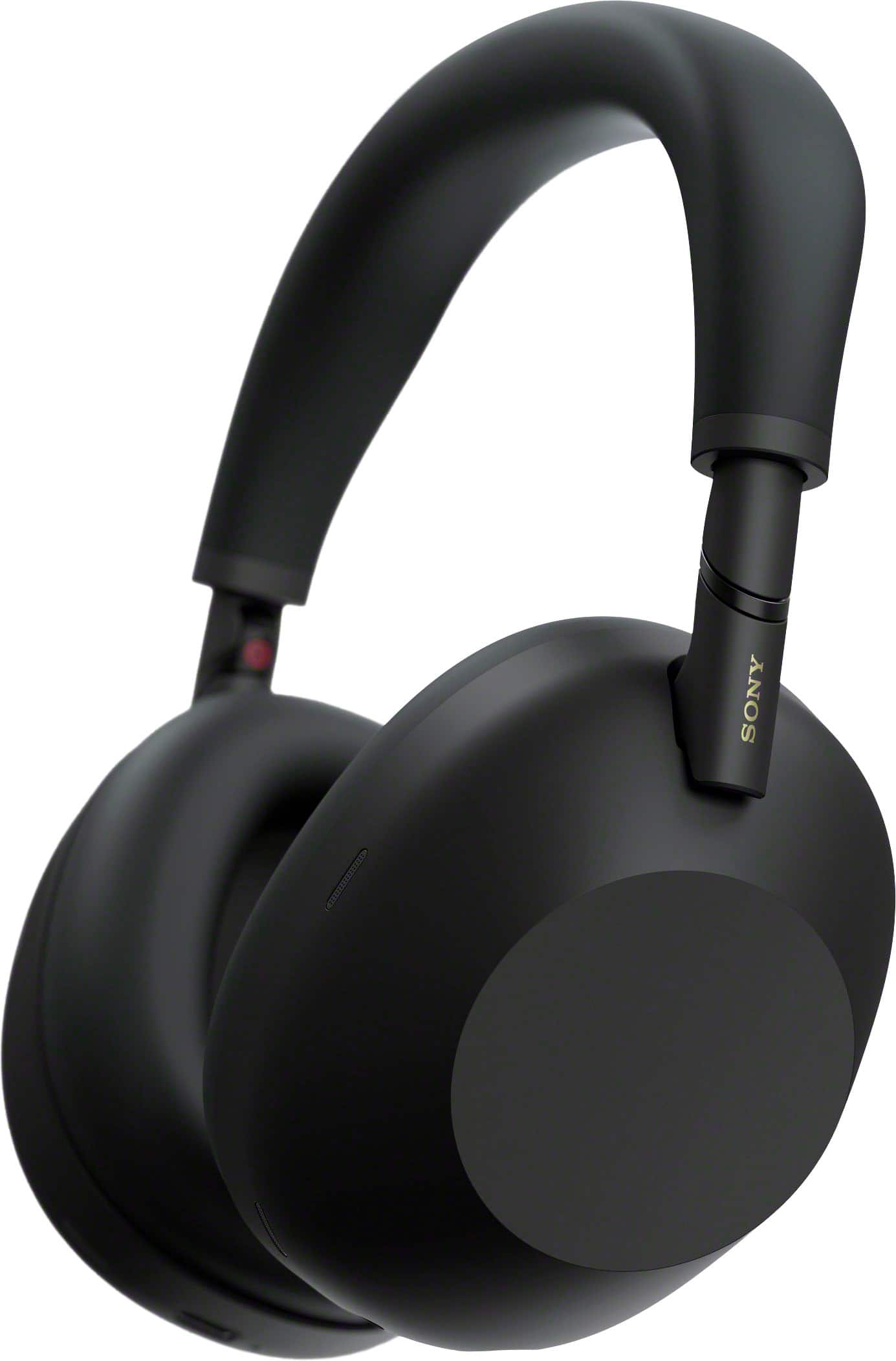
The XM6 still belongs in an editor’s kit, for two jobs. Job one: review passes. Watching a cut end to end on the couch, on a plane, in the world where your audience lives, on the kind of consumer headphone your audience owns. That second part is the underrated one… hearing your mix the way a viewer will hear it is a legitimate QC step, and the XM6 is the reference consumer headphone of the moment. Job two: flights and client notes, where the noise canceling is the product. At $458 at Best Buy it’s at list price, and it’s the only pick in this guide I’d call optional. Buy it for what it is, not instead of the pairs above.
How the six compare
| Headphone | Type | Impedance | Detachable cable | Price (Sep 2026) | The job |
|---|---|---|---|---|---|
| Beyerdynamic DT 770 Pro (80 ohm) | Closed | 80 ohms | No | $179.99 | All-day editing default |
| Sony MDR-7506 | Closed | 63 ohms | No | $113 | Budget / the industry reference |
| Sony MDR-M1 | Closed | 50 ohms | Yes | $268 | All-day mixing step-up |
| Rode NTH-100 | Closed | 32 ohms | Yes | $134 | Comfort for marathon sessions |
| Sennheiser HD 490 Pro | Open | 130 ohms | Yes | $349.04 | Quiet-room mix reference |
| Sony WH-1000XM6 | Closed, wireless | n/a | n/a | $458 | Review passes and travel |
Every wired pick here runs properly from a laptop or interface. The only impedance trap in the category is the one we already defused: the DT 770’s 250 ohm sibling, which needs an amp you probably don’t own.
What matters in an editing headphone (and what doesn’t)
Isolation matters if you share air with anyone. Closed backs keep the office out of your ears and your program audio out of the room’s microphones. If you record VO at your desk, closed is the only option on this page. The Sennheiser HD 280 Pro deserves a mention here: around $90, with some of the strongest passive isolation you can buy at any price. If you cut next to a server rack or on location, it beats everything above at that one job; heavy clamp and a captive cable keep it out of the main list.
Comfort is a full-day measurement. Weight, clamp force, pad depth, and pad material decide whether hour eight feels like hour one. Velour and gel run cooler than leatherette. Deep pads beat shallow ones because your ear shouldn’t touch the driver plate. Try the clamp with glasses on if you wear them.
Look for replaceable parts, because pads are consumables and drivers aren’t. A headphone with user-replaceable pads and a detachable cable is a decade-long tool. A sealed fashion headphone is a two-year purchase you’ll make again at full price.
You want a tuning you can translate, which is why perfectly flat matters less than knowing your tool. The 7506 is bright and you learn to subtract it. The NTH-100 is polite and you learn to add. What kills mixes is switching reference all the time. Pick one, live on it, check on a second source before delivery.
The list of what doesn’t matter is shorter: Bluetooth codecs, gaming features, RGB anything, and the entire audiophile amp discussion below 150 ohms. Also, and this one costs people real money: the Audio-Technica ATH-M50x, the internet’s default recommendation, is tuned with a bass lift that’s fun for music and wrong for dialogue. It’s a fine headphone doing a different job. I own both; the comparison is where that argument gets the full treatment. For editing, everything in the table above beats it at its price.
FAQ
Do I need a headphone amp for any of these?
No. That’s a design constraint of this list. Every wired pick runs at full, clean level from a laptop jack or any USB audio interface. The only common headphone that does need an amp is the DT 770 in 250 ohms, which is exactly why this guide tells you to buy the 80.
Closed-back or open-back for video editing?
Closed, for almost everyone. The exceptions are a private, quiet room and a mixing-heavy workload, where an open back’s imaging pays for its total lack of isolation. If you’re not sure you’re the exception, you’re not.
Headphones or studio monitors?
Both, eventually. Headphones for the edit, detail work, and any room you can’t treat; speakers for final balance decisions, because that’s how your audience listens. When you’re ready for the speaker half, our studio monitors guide covers it, including why room correction beats cabinet size in an untreated room.
Are the 7506’s flaking pads a defect?
It’s age plus the pleather material; every pair does it eventually. Replacement pads cost about $15, install in five minutes, and many pros swap to aftermarket velour immediately and never look back.
What about the DT 770 Pro X?
Beyerdynamic’s modernized version: one 48 ohm impedance, detachable cable, updated driver. It’s a good headphone and probably the future of the line, but it launched as a limited edition and availability still wobbles, while the classic 80 ohm is cheaper, proven, and stocked everywhere. When the Pro X becomes the permanent mainline model, it’ll likely take the top slot here.
Where this fits in your setup
Headphones are half of an edit suite’s monitoring, the private half. The public half is a pair of speakers that can tell the truth in your room, and we’ve covered that in the studio monitors guide. The room itself is the third instrument, and treating it is cheaper than you think… the acoustic treatment guide walks through it. If you’re building the whole space from scratch, start with the home edit suite guide and branch out.
And that’s it! Six pairs, six jobs, no amp required. As always, this is what works for me and the editors I trust; your ears and your room get the final vote. If you have questions about a specific pairing, leave a comment and I’ll point you the right way.