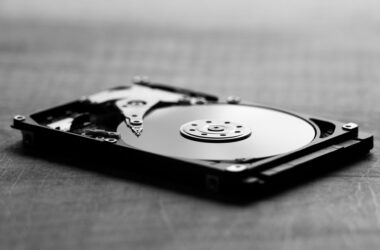
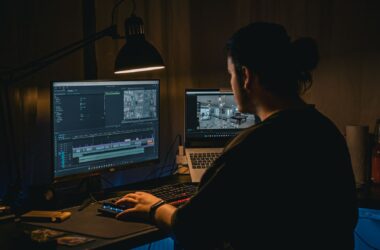
On a real set there’s a person whose entire job is making sure the footage survives the day. The DIT offloads every card through software that verifies each byte, writes copies to multiple drives, and doesn’t release a card for formatting until the checksums match. We built a whole DIT kit guide around that job. But when you’re one person shooting in another country with a backpack, you are the DIT, and the standard advice (“copy your cards to an SSD, use the cloud!”) skips both of the things that make a DIT’s copies trustworthy: verification, and separation.
Here’s the same job scaled down to one person and a carry-on: cards to reader to SSD, a verified copy instead of a hopeful drag-and-drop, and a travel version of 3-2-1 that survives a stolen bag. None of it is expensive. Most of it is habits.
Last updated: July 2026. Some links below are affiliate links. Buy through them and it helps keep the site running, at no extra cost to you. Drive prices are mid-shortage and volatile; every number here was verified in late July 2026 and should be read as “around this much at the time of writing.”
The workflow in one paragraph
Every shooting day ends the same way: cards come out of the camera and into a reader, offload software (not Finder, not Explorer) copies the footage to your primary SSD and mirrors it to a second drive in the same pass, checksums verify that every file on both drives matches the card bit for bit, and only then does a card go back in the rotation. The two drives never travel in the same bag again. Selects and project files trickle up to cloud storage overnight when the wifi allows. The full 3-2-1 (a third copy on your NAS or archive drives) completes when you get home. That’s the whole thing. The rest of this guide is picking the gear and making the verify step effortless.
Know your numbers: how much footage is a trip?
Travel-blog backup advice is written by people backing up photos, where a big day is 60GB. Video volumes are a different sport, and your drive purchases should start from this table:
| Codec | Data rate | Per hour of footage |
|---|---|---|
| H.265 100 Mb/s (typical hybrid 4K30) | 100 Mb/s | 45 GB |
| H.265 200 Mb/s (4K60 10-bit) | 200 Mb/s | 90 GB |
| ProRes 422, UHD 29.97 | 471 Mb/s | ~212 GB |
| ProRes 422 HQ, UHD 29.97 | 884 Mb/s | ~398 GB |
| BRAW 6K, 12:1 | ~650 Mb/s | ~292 GB |
| BRAW 6K, 5:1 | ~1,550 Mb/s | ~698 GB |
So a week of casual 4K30 H.265 (say, two hours a day) is about 630GB and fits a 1TB drive with room to breathe. A week of 4K60 doubles it. And one day of BRAW 6K at 5:1 eats 2TB before lunch, which is why the ProRes and RAW crowd travels with more storage than some edit bays. Size your drives off your codec, then add half again for the day the trip gets interesting.
The drives
Primary SSD: Lexar ARMOR 700 2TB
The working copy of your trip lives here, so it needs to be fast enough that nightly offloads aren’t a chore, and rugged enough that a bad day doesn’t matter. The ARMOR 700 is both: 2,000 MB/s reads and writes, IP66 dust and water sealing, and at around $350 for 2TB it’s the rare fast drive whose price hasn’t gone sideways in the shortage. It’s also the pick that’s in stock, which in July 2026 is a spec.
Mac people, heads up: it’s a USB 3.2 Gen 2×2 drive, and Macs don’t do 2×2, so you’ll see about 1,050 MB/s on a MacBook. Still plenty for offloads; just don’t expect the number on the box.
The same 2×2 ceiling applies to the Samsung T9 2TB, the other drive worth cross-shopping in this class ($408.99, and I’ve broken down the whole T7 vs T7 Shield vs T9 question separately). And the usual speed king here, the SanDisk PRO-G40, is a great Thunderbolt drive that now runs about $870 at 4TB. That used to be scalper pricing; a year of NAND shortage made it the market rate. Adorama wants $899 for the same drive, and nothing else in Thunderbolt-class 4TB costs less. Buy it when the capacity is the point; if 2TB covers your offloads, put the difference toward cards.

Budget SSD: Kingston XS1000 2TB
If the ARMOR’s speed tier is more than your codec needs, this is the best dollars-per-terabyte SSD you can buy right now: about $275 for 2TB. It’s a 10Gbps drive, so 1,050 MB/s, which for H.265 footage means your offload is still reader-limited, not drive-limited. No rugged rating, so it rides inside a padded pocket instead of clipped to the outside of anything, but I’d rather have two of these than one drive at twice the price. For a lot of people the smart play is exactly that: this drive twice, one primary, one mirror.

The mirror drive: a cheap rugged hard drive
Budget SSD storage costs about $137 per terabyte right now. Spinning rust costs about $48. Your second copy doesn’t need to be fast (it gets written once a night and read never, if all goes well), so the mirror is the hard drive’s whole job. The LaCie Rugged Mini 4TB runs around $200 to $220 depending on the week, shrugs off the drops that would worry you, and holds an entire trip’s worth of even heavy codecs. The 5TB Rugged at around $240 is the same idea with more room.
Buy it before the trip, not during. Hard drive supply is tight enough that WD has said it’s essentially sold out through the end of 2026, and prices have climbed 30 to 46 percent since last fall. This is not the product category to shop for from a hotel.

The small stuff: card wallet and a hub
Two unglamorous items worth their space in the bag. The Pelican 0915 is a $38 polycarbonate card case that holds twelve SD cards plus microSD, seals against water, and ends the era of loose cards in jacket pockets. Adopt a convention with it: label-up means empty, label-down means shot and not yet verified. It sounds precious until the day it saves a card from being formatted early.
And if you offload through a laptop with two ports and dreams, the UGREEN Revodok Pro 109 ($31) powers a reader and both drives at once so the nightly offload happens in one pass instead of a shuffle. Reader recommendations live in the cards and readers guide; the short version is a ProGrade or the $18 UGREEN UHS-II, and if your camera is CFexpress, a USB4 reader turns an hour of offloading into minutes.

The verify step: offload software
This is the part that separates a backup from a copy. When Finder copies a file, it reports success if the write completed, not if the bytes match. Silent corruption from a flaky cable, a tired card, or a drive hiccup passes right through, and you find out in the edit, three weeks later, when the source is long gone. Offload software reads every file back after writing and compares checksums against the original. If a byte flipped anywhere, you know that night, while the card still exists.
OffShoot (formerly Hedge, $169 one-time, Mac and Windows) is the one I’d hand a solo creator: drag cards in, it offloads to your SSD and your mirror drive simultaneously, verifies both, and won’t let you feel done until everything matches. ShotPut Pro ($169 one-time, the longtime set standard) does the same job with more reporting options; if a client ever asks for offload logs, it’s the pick.
Don’t want to spend anything? You already own a verified-copy tool. DaVinci Resolve’s Clone Tool, in the free version, on the Media page, does checksummed card offloads to multiple destinations (MD5 by default, xxHash64 if you switch it, and you should: it’s roughly twenty times faster on the SSD-to-SSD copies this workflow lives on). Windows folks can also use the free tier of TeraCopy. The tools are free enough that “I just dragged the files over” stops being a workflow and starts being a choice.
Travel 3-2-1: separation is the whole point
The classic rule is three copies, two different media, one offsite. On the road it becomes something more physical: after every offload you have three copies of the day (card, SSD, mirror drive), and the job is making sure no two of them share a fate. The SSD goes in the day bag. The mirror drive stays in the hotel safe, or your travel partner’s bag, or anywhere that isn’t next to the SSD. Cards don’t get formatted until both drives verify, and if capacity allows, don’t format at all: cards in the Pelican are a third copy, and card prices being what they are, carrying enough capacity to never format mid-trip is suddenly a rational luxury.
The offsite leg is where hotel wifi writes the rules. Budget hotel upload averages about 5 Mb/s, good hotels manage 15 to 30. At 20 Mb/s you move roughly 9GB an hour, call it 200GB in a very good day of never-interrupted uploading. One hour of 4K30 H.265 uploads in five hours; one hour of ProRes HQ takes a day and a half.
So cloud on the road means proxies, selects, and project files, not camera originals. Backblaze B2 (around $7 per terabyte per month) is what we use for that leg, and the full 3-2-1 completes when you’re home and the trip lands on the NAS or the archive shelf.
Can you skip the laptop?
Mostly no, and the product graveyard says why: the Gnarbox is dead, WD’s wireless passport drives are dead, LaCie’s DJI Copilot is dead. The standalone offload gadget category has been discontinued into near-extinction, and the survivors ask for compromises. The UnifyDrive UT2 ($399 direct, bring your own NVMe drives) is the one credible current device: card slots, one-button offload, checksum support. But its battery runs about 20 minutes under heavy transfer by the maker’s own FAQ, so it’s really a power-bank-tethered device, and you’re buying its storage at shortage prices.
The setup that works laptop-free is an iPad. OffShoot Solo ($49.99 on the App Store, runs on iPhone too) does real checksummed offloads on iPadOS: reader and SSD into a powered hub, cards verified onto the drive, no laptop in the bag. What you lose without a computer is the easy simultaneous mirror, so treat the iPad rig as the light-trip option, not the default. And the one thing not to do: a bare Files-app copy on an iPad or iPhone, or shooting ProRes straight to an external SSD and calling that a backup. Those are single unverified copies of irreplaceable footage.
The nightly ritual
What this looks like in practice, twenty minutes a night: cards out of the camera and into the wallet label-down. Reader, SSD, and mirror drive onto the hub. OffShoot or the Clone Tool runs the offload to both drives with verification on. While it runs, skim the day’s footage and flag selects. Checksums pass, cards flip label-up (or stay archived if you’re not formatting), SSD into the day bag, mirror into the safe, selects queue up to B2 overnight. Then you’re done thinking about it, which is the entire point.
FAQ
What does “verified copy” mean?
The software computes a checksum (a fingerprint) of each file on the card, copies the file, then reads the copy back and computes the fingerprint again. Match means every byte survived. The standard fingerprints are MD5 (the old default, and what clients ask for) and xxHash64 (dramatically faster, the sane default for your own work). Finder and Explorer do none of this.
Is one SSD enough if I upload to the cloud every night?
Check the table above against your hotel’s upload speed. For most video volumes the cloud can’t keep up on the road, which means for days at a time your “backup” would be one drive in one bag. The $200 mirror hard drive exists because of exactly that gap.
Should I format cards during the trip?
Only after both drive copies verify, and only if you need the capacity. Unformatted cards are a free third copy. Count your cards against your shooting days before you leave; at current card prices it’s often cheaper to buy one more card than to be forced into formatting on day three.
Do I really need paid offload software?
No. The free Resolve Clone Tool verifies copies just fine, and it’s likely already on your laptop. What $169 for OffShoot buys is friction removal: simultaneous multi-destination offloads, automatic verification you can’t forget to turn on, and presets that make the right thing the lazy thing.
And that’s it
Two drives, a card wallet, one piece of software, and the discipline to never let two copies share a bag. That’s DIT-grade footage safety at solo-creator prices. The gear upstream of this guide lives in the cards and readers guide, the full-crew version is the DIT kit, and what happens to all this footage when you get home is the media management guide. This workflow is what works for me and the traveling shooters I know; if your trips have taught you a trick I missed, leave a comment.