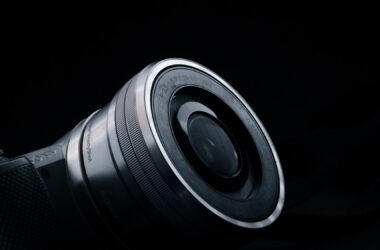
Five thousand dollars is serious-camera money. This is the bracket where you stop making compromises and start choosing your problem: a do-everything flagship hybrid, a medium-format sensor with resolution to spare, or a cinema camera you build a rig around. All five are good cameras. The mistake at this price is buying the one built for someone else’s work.
Which is also the trap. Most people reading this don’t need $5,000 of camera, and the gap between a $2,000 body and these only shows up under specific demands: 8K for heavy reframing, a hundred-plus megapixels for big prints, or a cinema workflow with a crew. And the body still isn’t the whole bill. Pro glass, fast CFexpress cards, and, if you go cinema, the power, media, and monitoring a bare cine body needs can match what you paid for the camera.
So here are the five I’d recommend, one for each kind of shooter, spread across five brands so you’re seeing the best tool for each job and not one company’s lineup. Prices are body-only, and four of the five come in under $5,000. The cinema pick doesn’t, and I’ll explain why it’s on the list anyway.
Last updated: June 2026. Some links below are affiliate links. Buy through them and it helps keep the site running, at no extra cost to you. I only point at gear I’d be comfortable handing to a friend.
TLDR
If you just want the answer: the Nikon Z8 is the most camera for the money, a near-flagship hybrid that does almost everything well. Shooting stills-first with fast action? The Canon EOS R5 Mark II. The cinema slot now comes with an asterisk: RED discontinued the Komodo, and its replacement, the KOMODO-X, runs $6,995. It stays on the list because nothing under the cap has a global shutter. The rest of this guide is who should pick what, and why.
Best overall: Nikon Z8
The Z8 is essentially Nikon’s flagship Z9 with the grip cut off, and at around $3,500 to $4,000 it’s the most complete camera in this bracket. The 45.7MP stacked sensor shoots 8K internally, the autofocus and buffer keep up with sports and wildlife, and the electronic-shutter-only design means there’s no mechanical shutter to wear out. For someone who shoots a real mix of high-end stills and video and wants one body to do it all, nothing else here is as well-rounded. It’s big and heavy, closer to a pro DSLR than a compact mirrorless; sustained 8K generates heat and drains batteries fast; and the lack of a mechanical shutter shows up as rolling shutter in rare fast-motion edge cases. It’s also more camera than a lot of buyers will ever push.

Best full-frame hybrid: Canon EOS R5 Mark II
If your work leans stills, especially fast-moving stills, the R5 Mark II is the one. Canon’s 45MP stacked sensor delivers roughly 30 frames per second, eye-control autofocus that literally focuses where you look, and 8K video on top, all in a lighter body than the Z8. For weddings, events, sports, and wildlife where you’re firing bursts and tracking erratic subjects, this is the most confident hybrid here. Push extended 8K or high-frame-rate recording and it can throttle, so it’s not the pick for long continuous takes. RF glass is also expensive and Canon still limits third-party autofocus lenses, so the system costs more over time. And at around $4,299 body, it’s the priciest hybrid on this list.

Best for video and low light: Sony a7S III
The a7S III is the specialist. Its 12.1-megapixel full-frame sensor sounds low until you shoot in the dark, where those big pixels pull clean, usable footage out of light that makes other cameras fall apart. Add 4K up to 120fps in 10-bit, reliable autofocus, and no overheating to speak of, and it’s still the go-to run-and-gun video body years after launch, at around $3,499. Those 12 megapixels are fine for video but limiting for stills, and they leave almost no room to crop. There’s no 8K, it’s the oldest design here, and you give up the resolution the Z8 and R5 II hand you. Buy it if low-light video is your bread and butter. Skip it if you need megapixels.

Best for resolution: Fujifilm GFX 100S II
When you need resolution, nothing else in this bracket comes close. The GFX 100S II puts a 102-megapixel medium-format sensor, physically larger than full-frame, into a body that costs around $4,999, which a few years ago was unthinkable. For landscape, product, fashion, and fine-art work where you’re making big prints or cropping hard, the detail and tonal depth sit in another class. Just know what it isn’t. It’s slow, around 7 frames per second, with autofocus and video that trail the full-frame bodies here, so it’s a poor choice for action or run-and-gun. The GF lenses are big and expensive, and at $4,999 it sits right at the top of this budget. Buy it only if you already know you need the resolution.

Best cinema camera: RED KOMODO-X
This slot belonged to the RED Komodo, a real cinema camera with a global shutter for $2,995. RED has discontinued it, and the replacement breaks this guide’s budget: the KOMODO-X runs $6,995 body-only. It keeps the slot anyway, because nothing under $5,000 does what it does. The global shutter means zero rolling-shutter skew on fast pans and strobes, which none of the hybrids here can claim, and the X moves the same Super 35 sensor well past the old body: 6K REDCODE RAW at 80 fps instead of 40, 4K at 120, CFexpress Type B in place of CFast, and phase-detect autofocus that is finally usable. The bare body still needs rigging (power, media, monitoring) before it’s shootable, it’s not a stills camera, and the rig still roughly doubles the money. If $6,995 is past the line, the discontinuation did produce one bargain: used Komodos now sit around $2,600, and the camera didn’t get worse the day RED stopped selling it.

How the five compare
| Camera | Sensor | Max internal video | Mount | IBIS | Weight | ~Price |
|---|---|---|---|---|---|---|
| Nikon Z8 | Full-frame stacked, 45.7MP | 8.3K60 N-RAW, 8K30 ProRes | Nikon Z | Yes | 910 g | ~$3,999 body |
| Canon EOS R5 Mark II | Full-frame stacked, 45MP | 8K60 RAW 12-bit, 4K120 | Canon RF | Yes | 746 g | ~$4,299 body |
| Sony a7S III | Full-frame, 12.1MP | 4K120 10-bit 4:2:2 | Sony E | Yes | 699 g | ~$3,499 body |
| Fujifilm GFX 100S II | Medium format, 102MP | 4K30 10-bit (cropped region) | Fujifilm G | Yes | 883 g | ~$4,999 body |
| RED KOMODO-X | Super 35 global shutter, 19.9MP | 6K80 REDCODE RAW, 4K120 | Canon RF | No | ~950 g | ~$6,995 body |
What to look for in a sub-$5,000 camera
Decide between a hybrid and a dedicated cinema camera first. The Z8, R5 II, a7S III, and GFX all point and shoot. A RED does one thing brilliantly and demands a rig, and often a second set of hands. Be honest about which kind of shooter you are before the spec sheet seduces you.
Resolution and 8K are for specific jobs. You need 8K and a hundred megapixels for heavy reframing, large prints, or future-proofing client deliverables. For work that lives on the web, a sharp 4K is plenty, and the extra resolution mostly just fills your drives faster.
At this level, sensor readout matters. Stacked sensors (Z8, R5 II) and global shutters (KOMODO-X) cut the rolling-shutter skew that warps fast motion. If you shoot sports, action, or anything with quick pans, that’s worth more than another few megapixels.
Budget for the whole system. Pro lenses, fast CFexpress media, and, for cinema, power, monitoring, and storage can match or exceed the body price. A $6,995 KOMODO-X is a five-figure camera by the time it’s shooting, so plan for that before you fall for a body.
FAQ
Do you need 8K?
For most people, no. 8K pays off when you reframe and crop heavily inside a 4K timeline, make large prints, or want to future-proof footage for clients. If you deliver to the web or broadcast, a strong 4K is plenty and far easier on your storage.
Full-frame, medium format, or Super35?
Full-frame (Z8, R5 II, a7S III) is the flexible default. Medium format (the GFX) is a resolution specialist for stills. Super35 (the KOMODO-X) is a cinema standard that pairs with affordable cine glass. Match the format to the work you do most.
Is a cinema camera like the RED KOMODO-X worth it over a hybrid?
Only if you’ll rig it and want the R3D workflow and the global shutter. A hybrid is more flexible, autofocuses, and shoots stills. The KOMODO-X rewards a shooter who’s committed to a cinema setup and frustrates one who just wants to grab and go, and at $6,995 it prices like a commitment too. A used Komodo at around $2,600 is the cheaper way to find out which one you are.
Why does the Sony a7S III only have 12 megapixels?
It’s a deliberate trade. Fewer, larger pixels gather more light, which is why it’s so clean in the dark and so good at high-frame-rate video. The cost is resolution: 12 megapixels limits big prints and leaves little room to crop stills.
Working a different budget?
If $5,000 is more than you need, the value gets remarkable a step down at Best Cameras Under $2,000, where full-frame hybrids do most of this for a fraction of the price. Just starting out? Begin with Best Cameras Under $1,000.
Want the rest of our buyer’s guides in one place? They all live on the Gear Guides page.