A thousand dollars is the line where a camera stops being a gadget and starts being a system you live with for years. Spend much less and you’re mostly looking at fixed-lens compacts or older bodies that cap your video and fall apart in low light. Spend right here and you get a modern interchangeable-lens camera that shoots clean 4K and takes glass you can carry through two or three upgrades.
Nobody selling you a camera wants to say this out loud: the body is the cheap part. A second lens, a couple of fast cards, and a spare battery can match what you paid for the camera itself. So before you stretch for the priciest option on this list, decide whether that money is better spent on a lens you’ll notice every time you shoot. None of these five have in-body stabilization either, which matters more than it sounds once you start shooting handheld.
With that out of the way, here are the five I’d recommend under $1,000, one for each kind of shooter. Prices are body-only unless I say otherwise, because that’s the real number behind the “under $1,000” claim.
Last updated: September 2026. Some links below are affiliate links. Buy through them and it helps keep the site running, at no extra cost to you. I only point at gear I’d be comfortable handing to a friend.
TLDR
If you just want the answer: the Nikon Z50 II is the most camera for the money here, with autofocus borrowed from bodies that cost three times as much. Shooting mostly video for a channel? The Sony ZV-E10 II is built for exactly that. On the tightest budget, the Panasonic G100D gets you a real camera and a lens for around $700. The rest of this guide is who should pick what, and why.
Best overall: Nikon Z50 II
The Z50 II is the rare entry-level body that stops feeling entry-level the moment you start using it. Nikon dropped the same EXPEED 7 processor and subject-tracking autofocus from its flagship Z bodies into a $909 APS-C camera, so it locks onto eyes and faces with a confidence nothing else here can match. You also get 10-bit N-Log video and oversampled 4K/30 with no crop, which matters the day you decide to color grade. There’s no in-body stabilization, the rear screen is lower resolution than I’d like, and battery life is merely okay, so pack a spare. Add the kit lens and you tip just over a grand, which is why I’d buy it body-only and choose my own glass. For most people who want one camera that handles photos and video without drama, this is the default.

Best for video: Sony ZV-E10 II
If the camera is mostly going to point at you or ride a gimbal for a channel, the ZV-E10 II is the tool. Sony built it around creators: a current 26MP sensor, the best autofocus in this group for run-and-gun work, a flip-out screen, and full-width 4K up to 30p that oversamples from 5.6K for a clean image. It’s also tiny at 292 grams, and getting it that small cost Sony a lot of features. In-body stabilization is the first casualty, so the digital version crops in and handheld walking shots still wobble. Rolling shutter shows on fast pans, there’s no viewfinder or mechanical shutter, and long 4K takes can overheat and stop recording. If you shoot mostly short clips and talking-head video, none of that bites. If you need a viewfinder or long record times, pick something else here.

Best full-frame: Canon EOS RP
The RP is here for one reason: it’s the cheapest way into a full-frame sensor. That larger 26.2MP sensor gives you shallower depth of field and cleaner low-light stills than any crop-sensor body here, in a package that weighs less than some of them. For photography, portraits especially, it punches well above its $799 price. The reason it’s labeled “best full-frame” and not “best overall” is video: 4K is stuck at 24p with a heavy crop and the older contrast-detect autofocus, a 2019 design that trails everything else here, so it’s a weak movie camera. There’s a single card slot too, and the battery is small. Buy the RP if you mostly shoot stills and want the full-frame look for the least money. Skip it if video is anywhere near the top of your list.

Best value: Panasonic Lumix G100D
When the budget is the whole point, the G100D gets you shooting for the least money, and it shows up with a lens already attached. For around $700 you get the camera, the 12-32mm zoom, a proper electronic viewfinder, and a fully articulating screen, which is a more complete starter kit than anything else here at the price. The trade is the sensor. It’s Micro Four Thirds, smaller than the APS-C and full-frame bodies, so low-light performance and background blur don’t stretch as far. It also has no true in-body stabilization (the “hybrid IS” is electronic and crops into your frame), 4K caps at 30p in 8-bit, and the built-in mic catches wind easily. For a first camera, a travel camera, or a simple vlogging rig where you just want to point and shoot, it’s good value. Just go in knowing it’s the most limited body on this list.

Best for beginners: Fujifilm X-T30 III
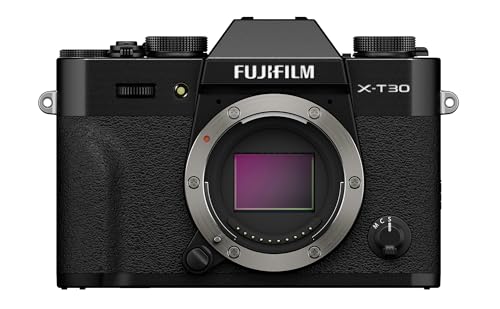
The X-T30 III is the one I’d hand someone who wants to learn photography and enjoy the process of it. Fujifilm’s film simulations mean your shots look finished straight out of the camera, the dial-heavy body teaches you what aperture and shutter speed do, and the new model pairs its 26MP sensor with the X-Processor 5, so the autofocus and 6.2K 10-bit video are a real step up from the old X-T30 II. It has a proper viewfinder too, which the cheaper bodies here skip. As of September 13, 2026, Amazon has no first-party stock and its third-party listings start at $1,299, so the link goes to Adorama, where the body is $999 on backorder. That $999 sits right at the top of this budget, and for the money there’s no in-body stabilization, the single card slot is the slower UHS-I type, and there’s no weather sealing. If you want a camera that’s a pleasure to carry and grows with you as you learn, this is it.
How the five compare
| Camera | Sensor | Max internal video | Mount | IBIS | Weight | ~Price |
|---|---|---|---|---|---|---|
| Nikon Z50 II | APS-C, 20.9MP | 4K60 10-bit (1.5x crop), 4K30 oversampled | Nikon Z | No | ~495 g | ~$909 body |
| Sony ZV-E10 II | APS-C, 26MP | 4K60 10-bit (4K30 oversampled) | Sony E | No | 292 g | ~$999 body |
| Canon EOS RP | Full-frame, 26.2MP | 4K24 8-bit (heavy crop) | Canon RF | No | 485 g | ~$799 body |
| Panasonic G100D | Micro Four Thirds, 20.3MP | 4K30 8-bit | Micro Four Thirds | No | ~412 g (with lens) | ~$700 kit |
| Fujifilm X-T30 III | APS-C, 26.1MP | 6.2K30 10-bit, 4K60 | Fujifilm X | No | 378 g | ~$999 body |
What to look for in a sub-$1,000 camera
You’re buying into a lens mount. The mount you pick decides what lenses you can buy for the next five years, and that bill usually dwarfs the camera. Sony E, Fujifilm X, Canon RF, and Nikon Z all have growing lineups; Micro Four Thirds is the cheapest and deepest of the lot. Choose the mount you want to grow into, then choose the body.
Don’t expect in-body stabilization at this price. None of these five have it, and that’s normal under $1,000. It means your handheld video leans on a stabilized (OIS) lens or a small gimbal. If smooth walking shots are central to what you do, budget for one of those before you blame the camera.
Pick sensor size for how you shoot. Full-frame (the Canon RP) gives you the best low light and shallowest depth of field but leans toward stills here. APS-C is the sweet spot most people want. Micro Four Thirds (the G100D) is the smallest and cheapest and does fine in good light. Don’t pay for a bigger sensor you’ll never push.
Body-only and kit are two different budgets. A kit lens gets you shooting today; a body-only buy assumes you’re picking glass yourself. Either way, plan for at least one more lens, because the do-everything kit zoom is the first place you’ll feel the limits once you find your style.
FAQ
Is full-frame worth it under $1,000?
Only the Canon RP offers it at this price, and really only for stills. If you shoot photos in low light or want that shallow full-frame look, yes, it’s worth it. For video, an APS-C body on this list will serve you better, because the RP’s 4K is cropped and slow to focus.
Do any of these have in-body stabilization?
No. Every camera here relies on stabilized lenses or electronic stabilization that crops into the frame. If smooth handheld video matters to you, plan on an OIS lens or a gimbal. If you mostly shoot stills or work off a tripod, it’s a non-issue.
Which is best for a complete beginner?
The Fujifilm X-T30 III, for its viewfinder, physical dials, and JPEGs that look great without any editing. The Nikon Z50 II is the close runner-up if reliable autofocus matters to you more than the hands-on shooting experience.
Can you shoot professional video on a sub-$1,000 camera?
Yes, within limits. The Z50 II and X-T30 III both record 10-bit, which is what you want if the footage is getting graded. Just respect the boundaries of the bracket: shorter record times before overheating, no in-body stabilization, and single card slots. Plenty of paid work has been shot on less.
What about a GoPro or action camera?
Different tool for a different job. If you want something tiny and tough to mount on a helmet, a bike, or underwater, that’s an action camera, not one of these. I cover those separately in The Best Action Cameras.
Working a different budget?
If you can stretch past a thousand, the picks open up a lot. Full-frame hybrids with real stabilization come into reach at Best Cameras Under $2,000. Got serious money and cinema ambitions? That’s Best Cameras Under $5,000.
Want the rest of our buyer’s guides in one place? They all live on the Gear Guides page.