Zac hit me up with a one-line ask: a NAS, about 210 terabytes, for the new film. No preamble. That’s the best kind of message to get, because it means the film is real.
If you’ve been here a while you know Zac Stracener. He’s my friend and long-time collaborator, the director (and the guy who carried a 350-pound fiberglass pod across a Malibu beach with me) behind Forever Sleep, the short we took to the Cannes Young Director Award. He’s spent the years since building 1.3 million people on TikTok who show up for scripted shorts about real things. And this summer Variety broke the news that his first feature, Echo, a psychological thriller about military veterans that he wrote and will direct, has Joel Courtney starring and producing, with Carousel Films behind it. Principal photography is later this year.
So he needs somewhere to put a feature. Not a drive. A feature. This is what I told him, with the receipts, because the answer to “what NAS do I buy for 200TB” is not on the usual NAS pages, including mine. Those top out at eight bays and a small team. A feature with remote editors is a different problem, and it has three parts: the box, the proxies, and the cloud layer that lets editors who aren’t in the room cut from it.
Last updated: October 2026. Some links below are affiliate links. Buy through them and it helps keep the site running, at no extra cost to you. Every price here was read on the live Amazon listing on October 12, 2026. Both QNAP chassis are sold by Amazon itself; the 24TB drives are a third-party seller with the buy box, and I say so again where it matters.
TLDR
If you just want the answer: a QNAP TS-1655 at $1,999 with twelve Seagate IronWolf Pro 24TB drives at $1,059.99 each, run as RAID-Z2 under QuTS hero. That’s 288TB of drives and about 240TB usable with two drives’ worth of parity, for roughly $14,700 before the network card. Put a TP-Link TX401 in its PCIe slot for 10GbE. Then make ProRes Proxy versions of everything once, at the NAS, and give the remote editors a LucidLink filespace with the proxies in it. The originals never leave the building until the conform.
Why 200TB means twelve bays, not eight
Zac’s first instinct was an 8-bay, because that’s what every “NAS for video” page recommends, including this site. So I ran the numbers for him, and the 8-bay dies on arithmetic before you get to a product page.
Start from the rule I will not bend on: a drive this big runs double parity. A 24TB rebuild reads every sector of every surviving drive, and at real-world rebuild speeds that’s a day and a half to three days of the array sweating. One unreadable sector on any other drive during that window kills a RAID 5 pool outright. RAID 6, or RAID-Z2 in ZFS terms, survives a second failure during exactly that window. On a feature there is no “we’ll re-shoot it.” So two drives of every array are parity, and you size from there.
| Bays | Drives | Usable, double parity | Hits 210TB? |
|---|---|---|---|
| 8 | 8 × 24TB | 144TB | No |
| 8 | 8 × 30TB Exos M | 180TB | No (210 only on single parity) |
| 8 | 8 × 32TB IronWolf Pro | 192TB | No |
| 12 | 12 × 20TB | 200TB | Ten short |
| 12 | 12 × 24TB | 240TB | Yes, with room |
The 30TB row is the trap. Eight of Seagate’s 30TB Exos M drives in RAID 5 land on 210TB to the terabyte, and that exactness is what makes people do it. Don’t. Nobody sells a 36TB drive at retail yet, so an 8-bay with two-drive parity cannot reach 200TB this year, no matter what you fill it with. Twelve bays of 24TB is the smallest box that does it with margin, and 24TB is the sweet spot on price per terabyte right now; the 32TB drives are about the same per terabyte but eight of them still fall short with two-drive parity, and the 20TB drives save you $230 each but leave you ten terabytes short, which on a feature means short by the last week of the shoot.
The box will report less than 240, by the way. Drives are labeled in decimal terabytes, the OS counts in binary, and ZFS keeps a slice for itself, so expect something like 215 to 218TB on the dashboard. That’s still above Zac’s number, and it’s why I did not try to get clever with eleven drives.
Where 200TB comes from on a feature
“Is 200 even right?” Fair question, and it depends on the camera, which for Echo isn’t locked yet, so here’s how I’d size any feature. Our storage calculator has the per-hour rates straight from the manufacturers: ProRes 422 HQ at UHD is about 318GB an hour, Blackmagic RAW 6K at 5:1 is about 698GB an hour, and 8K REDCODE at a medium-quality ratio is right around a terabyte an hour. A 25-day shoot that rolls four hours of material a day is 100 hours. At 6K RAW that’s 70TB; at 8K RED it’s 100TB.
Then the parts people forget. Proxies for every clip. Renders and exports, which pile up through a months-long edit. VFX plates and the pulls that come back from the vendor. Sound. And the second copy of every card you keep on the NAS during the shoot until the archive copy is verified, which doubles the camera footage for the weeks that matter most. That is how a 100-hour feature at 6K becomes 200TB on the day you most need it to be there. If Echo shoots a lighter codec, the same box just has more headroom, and headroom on a feature has never once been wasted.
The box: QNAP TS-1655
Twelve 3.5-inch bays, four more 2.5-inch bays, an 8-core Intel Atom C5125, 8GB of ECC-capable DDR4 that goes to 128, two M.2 NVMe slots for cache, PCIe slots, and it runs QuTS hero, QNAP’s ZFS operating system, which is the reason I picked it over the Synology at the same price. The TS-1655 is $1,999, sold by Amazon, and the listing had four left when I checked. QNAP badges it “long-term availability,” which in their catalog means it isn’t a model-year product that vanishes next spring.
ZFS is the part that matters for a film. Every block is checksummed, so the silent kind of corruption that a conventional RAID happily rebuilds into your master gets caught and repaired from parity. Snapshots are free and instant, which means when an assistant editor deletes a bin on a Friday you roll the folder back instead of calling anyone. And RAID-Z2 is the double-parity layout I described above, native, with no controller card to die on you. Give it RAM: ZFS wants it, and 8GB is the floor. Budget a 32GB kit when you order the drives.
The downside is the network ports. The TS-1655 ships with two 2.5GbE jacks, and 2.5GbE is about 290MB/s, fine for ProRes HQ, not fine for streaming 6K RAW to an edit bay. The fix costs $72 and takes five minutes, and it’s the next section. The other downside is the CPU, which is a storage-server chip, not an editing workstation; it will serve 10GbE all day but it is not the box you run heavy Plex transcodes or a dozen VMs on. For that there’s the step-up below.
What I steered him away from: the Synology DS2422+ is the same $2,000 for 12 bays but ships with 4GB and four 1GbE ports, so you’re buying RAM and a 10GbE card before it’s useful, and the DS3622xs+ at $3,450 only accepts Synology-listed drives. The UGREEN DXP8800 Plus I recommend in the NAS guide is a better box per dollar than any of these, with Thunderbolt and 10GbE in the chassis, but it’s eight bays, and eight bays is 144TB. The whole point of this post is that number.

The drives: twelve IronWolf Pro 24TB
This is where the money goes. Twelve IronWolf Pro 24TB drives at $1,059.99 is $12,720, and read the listing before you click: on October 12 the buy box belonged to a third-party seller, Prime MegaStore, not Amazon, at the same $1,059.99 the WD Red Pro 24TB was going for with three left. That’s the drive market in 2026, which I wrote up in the drive guide: a shortage, prices up, Amazon’s own stock thin on anything over 20TB. Check the seller line before you click, and if a listing says Renewed, close it. Amazon Renewed 24TB drives were $750 to $820 the same day, and a refurb from an unnamed reseller is not what you put a feature on. Seagate’s own factory-recertified Exos drives are a different story, and the drive guide covers when they make sense.
Why IronWolf Pro and not plain IronWolf or a desktop drive: CMR recording, a 550TB-per-year workload rating, rotational vibration sensors for a chassis with eleven neighbors, five-year warranty, and Seagate’s Rescue recovery service for three years. Twelve 7200rpm drives in one tower are loud, like machine-room loud, so this box lives in a closet with a long cable, not next to the edit desk.
The cheaper version is twelve IronWolf Pro 20TB at $829.99, a $2,760 saving for 200TB usable. If your number is honestly 150, buy those. Zac’s wasn’t.
Burn them in. Before a single card lands, build the pool, run a full scrub, and let it sit under load for a couple of days. Drives that are going to die early tend to die in the first hundred hours, and you want that to happen while the array is empty and the return window is open.

The step-up: QNAP TVS-h1277AX
If the edit is going to happen in the same building as the NAS, with two or three editors pulling RAW straight off it, the TVS-h1277AX is the faster box: a 6-core Ryzen 5, DDR5 to 192GB, two 10GbE ports in the chassis, four U.2 NVMe bays for a proper flash tier, three PCIe Gen4 slots, same QuTS hero. It’s $3,449 from Amazon, five left on the 12th.
Read the bay count before you fall for it, though. Twelve bays on this one means eight 3.5-inch plus four 2.5-inch U.2, so your spinning pool is eight drives, and eight 24TB drives in RAID-Z2 is 144TB. For Zac’s problem it’s the wrong shape. For a post house that wants a 100TB working pool with NVMe in front of it and 10GbE out of the box, it’s the right one, and that’s the version of this build I’d point a small studio at. The shared-storage ladder picks up from there.

Getting it to the edit bay at 10GbE
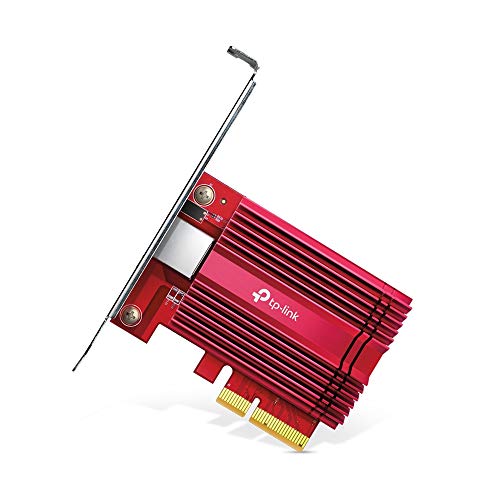
Twelve drives in RAID-Z2 will stream well over a gigabyte a second sequentially, and 10GbE moves about 1.1GB/s, so the wire is the ceiling and it’s a high one: a single 8K REDCODE stream is under 300MB/s. The card for the NAS side is the TP-Link TX401, $71.99 from Amazon, a plain 10GBASE-T PCIe card that QNAP’s OS picks up without drama. On the Mac side it’s the OWC Thunderbolt 4 10G adapter at $164.99, and a single Cat6a cable between the two if it’s one machine. Two or more machines, add the TP-Link TL-SX1008 8-port 10GbE switch at $349.99. The 10GbE guide has the long version, including why the cheaper 2.5GbE gear is fine for ProRes and wrong for RAW.
And a UPS. Twelve spinning drives mid-write when the power blips is how you spend a weekend learning about ZFS recovery. The APC BX1500M I recommend in the NAS guide is $189.99 and holds the box up long enough to shut down cleanly, which QNAP’s OS will do on its own over USB.
Part two: make proxies once, at the NAS
The second thing I told Zac is what makes remote editing on a feature possible at all: nobody cuts from the RAW. The 240TB box is the vault and the conform source. The edit happens on proxies, and the proxies get made one time, by one machine, sitting next to the NAS over 10GbE, the week the cards come in.
ProRes Proxy at 1920×1080 runs about 45 megabits a second, which is roughly 20GB an hour. A 100-hour feature is 2TB of proxies; a 200-hour one is 4TB. That is the number that goes to the cloud, and it fits on a laptop’s internal drive, and it scrubs like butter on a MacBook Air. Resolve’s Generate Proxy Media and Premiere’s ingest presets both write them with matching names and timecode, so the relink back to the originals at the end is a checkbox, not a weekend. I wrote the per-NLE steps and the “when proxies won’t save you” cases in Proxy Workflows, Honestly, and all of it applies here, with one change: on a feature, proxies are not optional, and they’re made before anyone opens a timeline.
Keep the folder structure identical between the proxy tree and the original tree, down to the reel names. Every relink problem I’ve seen on a long-form job came from someone “tidying” one side.
Part three: LucidLink for the editors who aren’t in the room
Zac’s editors won’t all be in LA, and the old answer to that, shipping drives and syncing Dropbox folders, breaks on a feature the first time two people have different versions of the same bin. What I told him to do is put the proxies, the project files, and the sound in a LucidLink filespace.
LucidLink is not sync. It mounts as a drive on each editor’s machine and streams only the blocks an app asks for, with a local cache, so a 4TB filespace does not download 4TB to anyone; an editor scrubbing a clip pulls that clip. It’s zero-knowledge encrypted, it has Premiere-aware file locking so two people can’t stomp the same project file, and it has snapshots. The NAS at home base stays the source of truth for the originals; the filespace is the source of truth for the cut. When picture locks, the conform relinks the proxies to the RAW on the TS-1655, over 10GbE, in the room.
Pricing, read on LucidLink’s own page on October 12, 2026: the Business plan is $27 per member per month with 400GB of pooled storage per member and $8 per 100GB a month past that, capped at 25 members, with 30-day snapshots and a 30-day trial. Four seats is $108 a month with 1.6TB included; a 4TB proxy set runs about $192 over, so call it $300 a month for the life of the edit. The $7 Starter plan is capped at 1TB total, so it’s out for a feature. Their page says Business is “best for up to 10TB,” which a proxy workflow stays well under; if someone suggests putting the RAW in the cloud, that number is your answer, and so is the egress bill.
The NAS is not the backup
RAID-Z2 protects you from two dead drives. It does not protect you from a fire, a theft, a ransomware note, or the assistant who formats the wrong pool, which is why “it’s on the RAID” has ended more than one friendship. During the shoot, every card gets copied twice before it’s wiped: to the NAS and to a shelf drive that leaves the building. After wrap, the camera originals go to LTO or a cold cloud bucket and the NAS becomes the working copy, not the only copy. The archiving guide walks through the LTO versus cloud call, and it’s where the last chunk of this budget goes.
What it all costs
| Part | Price, Oct 12, 2026 | Note |
|---|---|---|
| QNAP TS-1655 | $1,999.00 | Sold by Amazon |
| 12 × IronWolf Pro 24TB | $12,719.88 | Third-party seller, buy box |
| TP-Link TX401 10GbE card | $71.99 | NAS side |
| OWC Thunderbolt 4 10G | $164.99 | Mac side |
| APC BX1500M UPS | $189.99 | |
| Total | $15,145.85 | ~240TB usable, before RAM and the switch |
| Optional: TL-SX1008 switch | $349.99 | Only with two or more machines |
| LucidLink Business, 4 seats, ~4TB | ~$300 / month | For the life of the edit |
Fifteen grand for the vault is real money, and it’s also about a day of a union crew. The drives are 84% of it, which is why the only real way to cut this bill is capacity, not the chassis, and why I told Zac to buy the 24s once rather than the 20s now and the 24s next year.
FAQ
Why not a Thunderbolt RAID instead of a NAS?
Capacity and sharing. The biggest Thunderbolt arrays I’d recommend are eight bays, which is 144TB with double parity, and they belong to one computer. A NAS is reachable by every machine in the building and by the proxy workstation at the same time. If the project were 60TB and one editor, the Thunderbolt roundup is the better read.
Can the editors just work off the NAS remotely?
Over a VPN, technically, and practically no. A home upload link is the bottleneck, and timeline scrubbing over a VPN feels like editing through a straw. The proxies-in-LucidLink layer exists so the NAS never has to serve anyone who isn’t on the 10GbE wire.
Do I need 10GbE if I’m only editing proxies?
For the proxy edit, no; 2.5GbE streams ProRes Proxy with room to spare. You need it for the two jobs that touch the originals: making the proxies in the first place, and the conform and grade at the end, when you’re pulling RAW frames in real time. Seventy-two dollars for the card is the cheapest part of this build to not skip.
QTS or QuTS hero on the TS-1655?
QuTS hero. It’s the ZFS one, it’s what makes RAID-Z2, checksums, and snapshots available, and it’s why this box beats the Synology at the same price. Give it the RAM, then don’t think about it again.
In conclusion
That’s the plan I sent Zac: the box, the twelve drives, the card, a closet to put it all in, and proxies plus a filespace for when the cards start coming in. I’ll update this post when Echo is in the can with what held up and what I’d change, the same way I did with Forever Sleep.
And that’s it. What you see here is what I’d buy for a friend’s feature with my own name on the recommendation, which is a higher bar than a roundup. For the smaller version of this problem, the NAS guide covers 4 to 8 bays, the drive guide covers what to fill them with, and the rest of the storage lane lives on the Gear Guides page. Building something like this for a film of your own? Leave a comment, I read all of them.