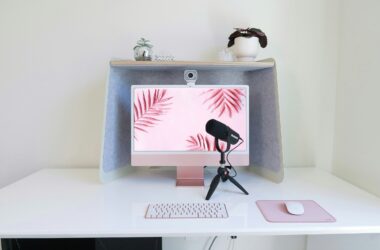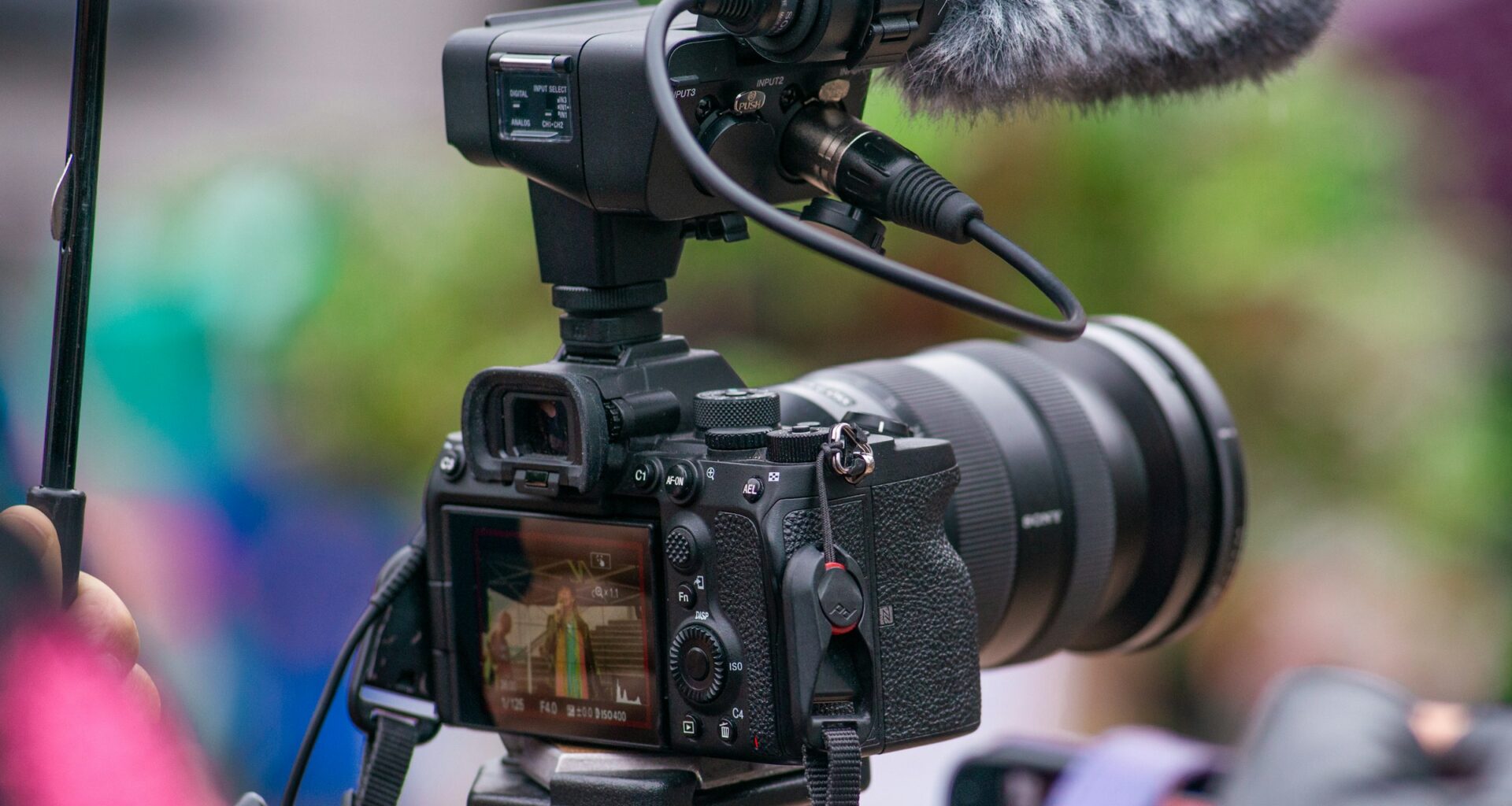

Most “best camera for YouTube” lists rank bodies by the spec sheet. I’d rather rank them by what shows up on the timeline. I cut footage from these cameras all week, and the differences that matter aren’t on the box: whether the camera shut itself off at minute six, whether you got 10-bit log or a baked-in look you can’t fix, whether the file plays on your laptop without proxies.
So this guide is organized by use, not price, from about $400 to $2,500. You probably need less camera than you think: a $619 body with 10-bit log and reliable autofocus will outlast your skills for years, and the money you don’t spend on it is a lens, a key light, and a mic. The talking-head studio kit covers the rest of the desk; this post is the camera.
Last updated: November 2026. Some links below are affiliate links. Buy through them and it helps keep the site running, at no extra cost to you. Prices were checked on October 25, 2026 and will drift.
TLDR
If you just want the answer: the Sony ZV-E10 II is the camera for most YouTubers at $1,198: 10-bit S-Log3, Sony’s autofocus, a 4K webcam mode, and one menu setting you change on day one. On a tighter number, the Canon EOS R50 V at $619 is the value pick. Ready for a real cinema body? The Sony FX30 is the step up. The rest of this guide is who should pick what, and why.
The picks
Best for most YouTubers: Sony ZV-E10 II
The ZV-E10 II is the default because it’s the cheapest body that hands you files I’d be happy to grade: 4K30 oversampled from 6K at full width, 4K60 with a 1.1x crop, and 1080p120, all 10-bit 4:2:2 with S-Log3 and S-Cinetone, from a 26MP APS-C sensor. Autofocus is Sony’s 759-point system with real-time tracking and the Product Showcase mode that racks to whatever you hold up to the lens. Mic input, headphone jack, and the big NP-FZ100 battery.
The heat is what decides this purchase. At default settings it shuts down after a few minutes of 4K in a warm room. Short clips. The fix is a menu setting: set Auto Power OFF Temp to High and the same body records 4K60 for over an hour. You also give up in-body stabilization (Active mode is digital, with a 1.33x crop), get a micro HDMI port, and pay $1,198 for a body that launched cheaper. Want a stills camera that also shoots good video? The Nikon Z50 II at $956.95; its 4K60 carries a 2.25x crop, so stay at 4K30.

Best budget video-first: Canon EOS R50 V
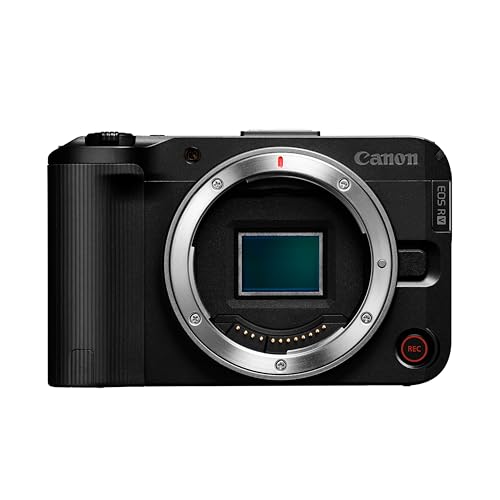
The R50 V at $619 is the body I’d point a new channel at first. 4K30 at full width, oversampled from 6K, in 10-bit C-Log3 and HLG from a 24MP APS-C sensor: the same bit depth as bodies costing three times as much. Dual Pixel autofocus with subject detection holds a face at a desk without hunting. Fully articulating screen, mic and headphone jacks, and 4K over USB-C as a webcam.
The price shows in 4K60, which takes a 1.56x crop, so a 24mm lens becomes a 37mm. There’s no IBIS, so handheld work leans on a stabilized lens or a gimbal. Every codec is Long GOP, a heavier decode on older laptops. The small LP-E17 battery runs about 70 minutes of 4K30, so buy spares or power it over USB-C. Clips cap at roughly 55 minutes at room temperature, long enough for anything but a podcast. If none of those bite, the money you save over the ZV-E10 II is a lens.
Best pocket camera for vlogging: DJI Osmo Pocket 3
If your channel is shot while walking, the Osmo Pocket 3 replaces a camera, a gimbal, and the stabilization pass in post. A 1-inch sensor on a 3-axis gimbal, 4K up to 120fps, 10-bit D-Log M so it grades next to a mirrorless body, and a touchscreen that rotates to vertical for Shorts. It pairs to DJI’s wireless mic transmitters with no receiver and works as a USB-C webcam. At $395 it’s the cheapest pick here.
The newer Osmo Pocket 4 and 4P aren’t sold in the US; DJI landed on the FCC’s Covered List in December 2025, and the gray-market listings at $700 and up carry no US warranty. Insta360 moved into the gap: the Insta360 Luna Pro at $599.99 is an 8K pocket gimbal with a Leica lens, and the Luna Ultra at $769.99 adds a second telephoto camera, Dolby Vision, and 10-bit I-Log. Newer hardware, but the Pocket 3 is still what I’d buy for most people: 8K on a pocket camera is a storage bill before it’s an upgrade, and the DJI gimbal and autofocus are proven.

Best step-up cinema body: Sony FX30
When a hybrid stills camera stops being the right shape for video, the FX30 is where I send people. It’s a Cinema Line body that happens to take photos: a fan, so it records until the card is full; dual base ISO; 4K up to 120fps in 10-bit 4:2:2 S-Log3; IBIS; and the same color science as the FX3 and FX6, so your footage cuts next to a rental camera. At $2,098 it’s the least you can pay to get into Sony’s cinema line.
The trade is a Super 35 (APS-C) sensor, so low light and depth of field fall behind the full-frame bodies below, and 4K120 crops in further. No viewfinder, no mechanical shutter. Sony FX3 vs FX30 settles the full-frame question from the edit bay. For a YouTube channel the FX30 is the one, and the difference goes to glass.

Best full-frame camera for long-form: Panasonic Lumix S5 IIX
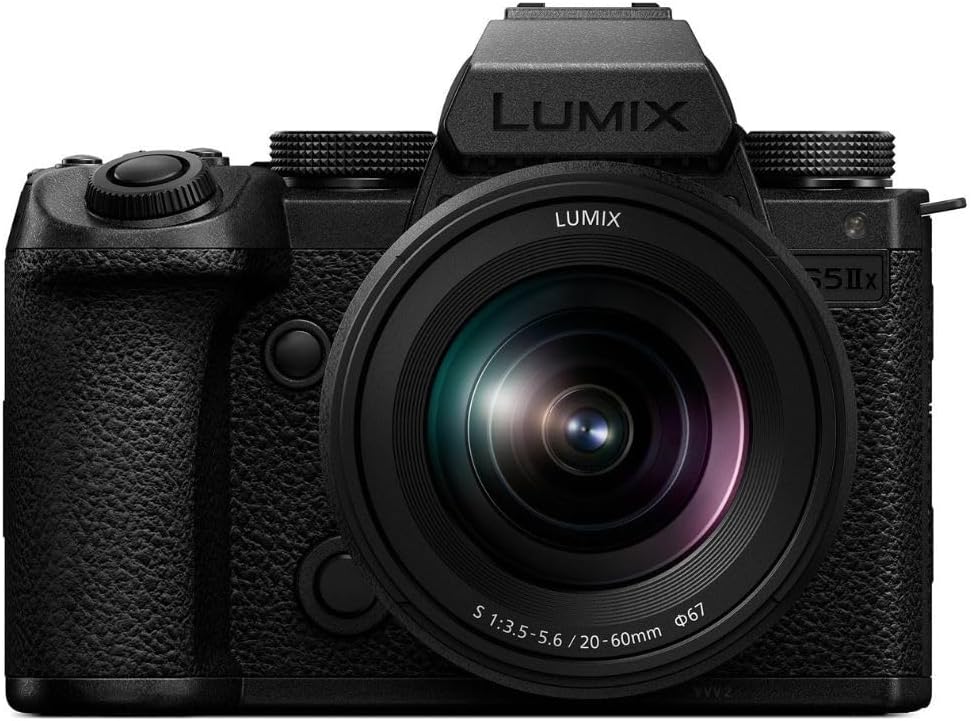
Podcasts and two-hour tutorials are the job the S5 IIX was built for. It has a fan and no record limit. The 24.2MP full-frame sensor shoots 6K open gate, the whole 3:2 sensor, so you pick the frame in post: a 16:9 for the long video and a 9:16 for the short from the same clip. V-Log is a 10-bit curve that grades as well as anything here, IBIS handles handheld B-roll, and the X adds ProRes RAW output over HDMI. At $2,097.99 it’s priced like the FX30 and does a different job.
Panasonic’s autofocus is much improved and still trails Sony and Canon on erratic subjects, the L-mount catalog is smaller than Sony E or Canon RF, and at around 740 grams it’s a brick next to the ZV-E10 II. For the same idea in a smaller body, the Lumix GH7 at $2,197.99 is the Micro Four Thirds take: 5.8K open gate, internal ProRes RAW, 4K120, phase-detect autofocus, 32-bit float audio with its XLR handle, 535 grams. You pay in sensor size and low light.
Best full-frame compact: Sony a7C II
The a7C II is for the creator whose channel is half travel and half stills and who wants full frame in a body not much bigger than the ZV-E10 II. The 33MP sensor gives you oversampled 4K30 at full width, 4K60 with a crop, 10-bit 4:2:2 S-Log3, and photos you can sell, plus a viewfinder, IBIS, a flip-out screen, and current Sony autofocus. At $2,498 it’s the most expensive box here, and the money buys a camera that does two jobs well.
The Sony ZV-E1 sits at the same $2,498 with a 12MP full-frame sensor, active stabilization, and no viewfinder. It’s the better low-light video body and the worse camera for everything else. Unless you shoot dim rooms and never take photos, the a7C II is the one I’d pay for. Its own compromises are the 4K60 crop, a single card slot, and a body that gets front-heavy with a big lens.

If money isn’t the constraint
Three bodies above the picks, none of which a YouTube channel needs. The Sony FX3 (the current FX3A SKU) at $4,298 is the full-frame reference: 12MP, 4K120, 16-bit RAW out, a fan. The Sony FX2 at $2,698 is the full-frame Cinema Line body under it, 33MP in the FX shape with a tilting viewfinder the FX3 never had. And the Canon EOS R6 Mark III at $2,799 is the hybrid step-up: 32.5MP, internal Cinema RAW Light up to 7K60, 7K30 open gate, 4K120, IBIS. If you already own RF glass, it’s the one.
How the picks compare
| Camera | Sensor | Top video modes | 10-bit log | IBIS | Heat / clip limit | Price |
|---|---|---|---|---|---|---|
| Sony ZV-E10 II | APS-C, 26MP | 4K30 full width, 4K60 (1.1x crop), 1080p120 | S-Log3, 4:2:2 | No (digital) | Minutes at default; over an hour with Auto Power OFF Temp on High | $1,198.00 |
| Canon EOS R50 V | APS-C, 24MP | 4K30 full width, 4K60 (1.56x crop) | C-Log3 | No | About 55 minutes per clip at room temperature | $619.00 |
| DJI Osmo Pocket 3 | 1-inch, fixed lens | 4K120 | D-Log M | 3-axis gimbal | Battery, not heat | $395.00 |
| Sony FX30 | Super 35, 26MP | 4K120 (crop), 4K60 | S-Log3, 4:2:2 | Yes | Fan, no limit | $2,098.00 |
| Panasonic Lumix S5 IIX | Full frame, 24.2MP | 6K30 open gate, 4K60 | V-Log | Yes | Fan, no limit | $2,097.99 |
| Sony a7C II | Full frame, 33MP | 4K30 full width, 4K60 (crop) | S-Log3, 4:2:2 | Yes | No fan; same Auto Power OFF Temp setting | $2,498.00 |
Body-only prices where a lens is separate.
What matters
10-bit and a log profile. An 8-bit file has 256 steps per color channel, a 10-bit file 1,024. Invisible out of the camera, enormous when you push a grade: skin tones band and lifted shadows turn to mud. Log keeps the sensor’s full range in the file. Every pick here records 10-bit log internally, including the $395 Pocket 3.
The codec and bitrate are what you edit. You never cut “4K.” You cut H.265 Long GOP at 100 megabits, All-I at 200, or ProRes. Long GOP files are small and hard to decode, so an older laptop stutters until you make proxies; All-I files are bigger and scrub smoothly. The ZV-E10 II has both; the R50 V is Long GOP only.
Overheating and record limits. A small fanless body is a heater with a sensor in it. The FX30 and S5 IIX have fans and record until the card fills. The fanless ones have a temperature cutoff, and Sony’s default is conservative; Auto Power OFF Temp to High is the first setting to change on any Sony here. Some cameras also cap each clip (about 55 minutes on the R50 V). Ten-minute videos don’t care. Podcasts and streams do.
Autofocus in video, not stills. The question is whether it holds the face while you lean back, pick up a product, and lean in again, without breathing on every move. Sony and Canon are the two systems I’d trust unattended at a desk; Panasonic’s phase-detect bodies (the S5 IIX and GH7) are close for a seated shot and a step behind on erratic motion.
USB-C webcam mode is the hidden feature. Most of these bodies show up on your computer as a plain webcam over one USB-C cable (the standard is UVC), with no capture card or driver. The ZV-E10 II does 4K30 this way, the R50 V does 4K (1080p when bus-powered), and the Pocket 3 does it too. That’s a capture card you don’t buy.
Battery, stabilization, screen, mic input. These decide how the camera is to live with. A full-size battery (the NP-FZ100 in the Sonys) is a morning on one cell; the R50 V’s LP-E17 means spares. IBIS matters for handheld B-roll, not on a tripod; the ZV-E10 II and R50 V skip it. A screen you can see from in front of the lens is non-negotiable for solo work, and all six have one. A 3.5mm mic input is the minimum; for audio that un-clips a blown take in the edit, a wireless kit recording 32-bit float on the transmitter is the move (the wireless mic guide covers it), and the GH7 is the only body here that records 32-bit float in-camera, with its XLR handle.
What doesn’t matter: megapixels and 8K. A 4K frame is 8.3 megapixels; every sensor here clears that with room to crop, and the 12MP FX3 has shot theatrical features. 8K on a YouTube channel is a storage bill and a slower edit for a resolution the platform compresses away.
FAQ
Is a mirrorless camera worth it over a phone for YouTube?
For a talking-head channel in a lit room, a current phone gets you surprisingly far. The camera wins when you want a real lens, 10-bit log you can match to other footage, a mic input, and a body that records for an hour on a tripod without throttling. The R50 V at $619 is where that trade starts to make sense.
Do I need a full-frame camera for YouTube?
No. Full frame buys cleaner low light and shallower depth of field at the same aperture. At a desk with a key light, the APS-C ZV-E10 II and R50 V produce footage your viewers can’t tell from the a7C II‘s. Full frame starts paying off in dim interiors, at events, or when you want stills you can sell.
Can I buy the DJI Osmo Pocket 4 in the US?
Not through a US retailer. DJI was added to the FCC’s Covered List in December 2025, so the Pocket 4 and 4P never got US distribution; the listings you’ll find are gray imports. The Osmo Pocket 3 is still sold here and is still the pocket camera I’d buy. The Insta360 Luna Ultra is the US-available newer alternative if you want 8K and a telephoto.
Build the rest of the kit
Shopping by price bracket instead? Best Cameras Under $1,000 and Best Cameras Under $2,000 cover the same bodies by budget. The talking-head studio kit has the light and the mic for the desk, the wireless mic guide goes deep on audio, Best Action Cameras covers helmet and handlebar shooting, and if you make UGC for brands, the UGC tools list is the shorter shopping list.
And that’s it. Pick the body for the job you shoot. Your channel and your budget get the final vote. Disagree with a pick? Leave a comment. The rest of our buyer’s guides live on the Gear Guides page.