A seated talking-head video is the easiest thing to shoot badly and one of the cheapest things to shoot well. Nothing moves. The subject sits in a chair, the framing never changes, and the light keeps doing what you set it to do an hour ago. Every hard problem in production (motion, changing distances, unpredictable light) is deleted before you roll.
Which makes the standard advice frustrating. Search for a setup and you get a ring light, a USB mic on the desk, and whatever camera the leftover money buys. That list is backwards: the light is flat, the mic is too far away, and the camera got the budget the light deserved.
One honesty note before the picks. I don’t make talking-head or UGC content myself. I’ve lit interview setups on real sets and watched a lot of this footage arrive in post, so treat this as the kit I’d spec for a friend building a home studio, not a tour of my own desk. It’s the seated, planted-tripod companion to our must-have tools for UGC creators post. Two builds below: about $1,250 all-in, and about $3,300 for when the videos start paying rent.
Last updated: July 2026. Some links below are affiliate links. Buy through them and it helps keep the site running, at no extra cost to you. I only point at gear I’d be comfortable putting in a friend’s cart. Prices were verified on July 14, 2026, and they will drift.
The quick verdict
- The budget kit, about $1,250 all-in: Canon EOS R50 V, RF 16mm f/2.8, Godox SL60IID + softbox, Rode VideoMic GO II, Savage paper, basic tripod.
- The step-up kit, about $3,300: Sony FX30, Sigma 23mm f/1.4, Amaran 150c + dome, Sennheiser MKE 600, paper on a stand + accent lamp, SmallRig AD-01.
The budget kit, about $1,250
Six slots, and the ratio between them is deliberate: the camera gets half the budget, and light plus sound get most of the rest.
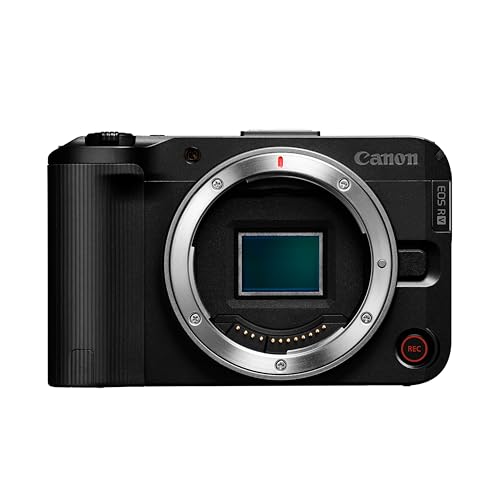
The camera: Canon EOS R50 V
Canon built the EOS R50 V for exactly this job. It has a real USB webcam mode (UVC/UAC, so it just shows up on a computer, no capture card), a dedicated streaming mode, clean HDMI out, a flip-out screen you can see from the chair, and a front tally lamp that says it’s actually recording. Dual Pixel autofocus holds your face without drama. It’s $649 at list, $619 on sale at this writing.
It launched after our best cameras under $1,000 guide went up, and it would slot straight into that guide’s next refresh. If you’d trade the creator plumbing for a stronger sensor and 4K60, the Sony ZV-E10 II from that same guide is the move at $998 body-only. That’s about $350 more for image headroom a seated 4K30 frame will rarely cash in.
The lens: Canon RF 16mm f/2.8 STM
The RF 16mm f/2.8 STM is $259, and on the R50 V’s APS-C sensor it frames like a 25.6mm. That’s the practical number: wide enough for a head-and-shoulders shot with the camera four or five feet away in a spare bedroom, without the fisheye stretch a phone’s ultrawide puts on your face. f/2.8 at that distance gives a touch of background softness while keeping your whole head in focus.
If you want heavier blur, the Sigma 16mm f/1.4 now ships in RF mount for about $489 to $539. Tempting, and also the most skippable upgrade here: backdrop depth (covered below) does more for the frame than f/1.4 does.

The key light: Godox SL60IID, plus a softbox
This is where this kit deliberately breaks from our UGC post, which recommends an 18-inch ring light. For handheld product clips, a ring light still does the job. For a seated frame you’ll shoot two hundred times it’s the wrong instrument: it lives on the lens axis, so it fills every shadow and flattens your face into a passport photo, and if you wear glasses it prints a glowing ring in both lenses.
The right instrument is a diffused COB: the Godox SL60IID, a 60W daylight light that runs $139 to $149, firing through an 85cm Bowens-mount softbox that adds another $40 to $50. Set it 45 degrees off to one side and a little above eye line and you get what a ring light can’t give you: shape. One side of the face slightly brighter than the other, a shadow under the jaw, a single soft catchlight instead of a halo. And the Bowens mount is the upgrade path, because every standard softbox, dome, and grid fits this light. The ring light’s stand fits a ring light.

The mic: Rode VideoMic GO II
The VideoMic GO II is $99, and the trick is where you put it: boomed just out of frame on a spare light stand, pointed down at your mouth from about two feet. At that distance a small shotgun sounds fuller than a lav clipped to your collar, and there’s nothing on your shirt for the frame to see. It has both 3.5mm and USB-C outputs, and the camera powers it, so there’s no battery to die silently in the middle of take 14.
Our UGC post sends creators to a wireless lav kit, which is right for content where you move. For a chair three feet from the camera, wireless is a radio link, a charging case, and a transmitter to hide, all solving a distance problem you don’t have. When you’re actually mobile, our wireless mics for creators guide is ready.

The backdrop: Savage Widetone paper, plus one bulb
Here’s the anti-upsell hero of the whole article. A 53-inch by 36-foot roll of Savage Widetone paper costs $20 to $25, comes in dozens of colors, and reads as a professional set on camera. Clamp it to a shelf, a curtain rod, or two nails and a dowel, and let it fall behind the chair. When a section gets scuffed, cut it off and pull down fresh paper. Photographers have run businesses on these rolls for decades while YouTube sells $150 collapsible backdrops that crease.
Add one smart bulb at about $14, dropped into a lamp you already own, placed behind and to the side of the talent. Dial it a few steps warmer or cooler than the key and you’ve got depth and separation for the price of lunch.

The support: a basic tripod
Honest call: a locked-off seated shot does not need a fluid head. You will never pan. A basic 60-inch tripod at about $40 holds the camera at eye level, which is the entire job description. Skip the $30 special that flexes when you touch it, and skip the $150 head too; that money belongs in the light.

What the budget kit adds up to
At list prices the six slots land around $1,270, so yes, a hair over the headline number. Two honest trims: buy the R50 V on sale at $619, and skip the accent bulb. What you should not trim is the softbox; a bare COB is a work light.
The step-up kit, about $3,300
The extra $2,000 buys three specific things: a camera with a cooling fan, a stop and a half of glass, and a key light that changes color. If none of those solve a problem you actually have, stay in the budget tier and bank the difference.
The camera: Sony FX30
The FX30 is the best-for-video pick in our best cameras under $2,000 guide, and it was $1,798 on a live promo at this writing (regular $2,098). For a course creator, its killer feature is boring: it has a fan. Mirrorless cameras aimed at photographers play overheat roulette on long takes; the FX30 is a Cinema Line body that will record a 90-minute lecture without blinking. You also get clean HDMI, USB streaming, and S-Cinetone, Sony’s skin-friendly picture profile.

The lens: Sigma 23mm f/1.4 DC DN
The Sigma 23mm f/1.4 DC DN is $549 and frames like a 34.5mm on the FX30’s crop sensor, which is about as classic as talking-head framing gets: tighter and more flattering than the budget kit’s wide, still forgiving of a small room. Wide open, the paper backdrop melts into a soft wash of color and the accent light turns into a proper glow.

The key light: Amaran 150c, plus Light Dome Mini SE
The Amaran 150c is a 150W RGBWW COB: more than twice the budget key’s output, and it produces any color you can name. That second part is the real upgrade, because between talking-head shoots the key can moonlight as an accent or background light for product shots and b-roll. It’s $359 at list, about $251 direct from Aputure at this writing. Put the Light Dome Mini SE on the front for about $70, same 45-degrees-and-above placement as the budget kit.
One buying note: there is no “150c S.” Aputure’s S refresh covered the daylight and bicolor models only, so the 150c you find is current, not superseded.

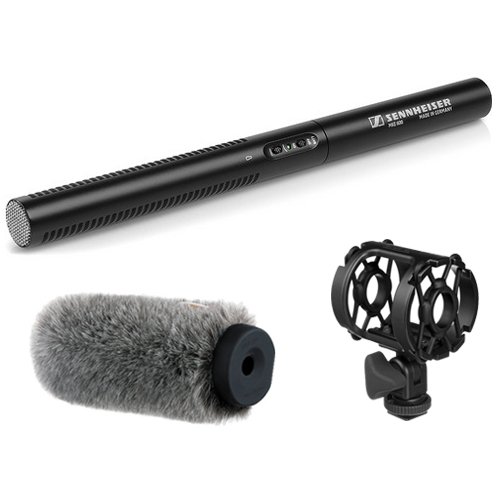
The mic: Sennheiser MKE 600
The MKE 600 is a proper supercardioid shotgun at about $299, boomed out of frame like the budget pick, with an engineering detail that saves real money. It runs on a single AA battery and can output over 3.5mm, so it plugs straight into the FX30 body’s mic input. That means you skip the roughly $400 XLR handle unit entirely; the handle earns its keep when you need two XLR inputs, not when one voice sits in one chair. It’s fuller low end and better room rejection than the $99 Rode, and the AA lasts around 150 hours.
The backdrop: same paper, real stand, one practical
The paper doesn’t change, because paper was never the weak point. What changes is repeatability: a Neewer T-stand at $60 holds the Savage roll on a crossbar so the set goes up identically every time instead of depending on how you clamped it Tuesday. Then swap the smart bulb for a Govee RGBIC floor lamp, $99 at list and $69 on sale at this writing, standing in the back of frame as a practical; a gradient of color climbing the corner behind you gives the shot depth that decoration never manages.
The support: SmallRig AD-01
The SmallRig AD-01 is $159 and dips to around $109 on sale, and this is where a fluid head starts making sense: the FX30 package is heavier, and you’ll eventually want this tripod for b-roll moves. If you want the lighter version with the DJI-style quick-release plate, the newer AD-01S exists; for a studio corner, the original is fine and cheaper.

What the step-up kit adds up to
At this writing’s sale prices the whole build lands right around $3,290. If the FX30 promo and the Amaran discount both lapse, it climbs to roughly $3,650, and the honest swap that pulls it back is the Amaran 200d S: daylight-only, $299 at list and about $239 direct, more output than the 150c, minus the color party trick.
Budget vs. step-up, side by side
| Slot | Budget kit | Step-up kit |
|---|---|---|
| Camera | Canon EOS R50 V, $649 ($619 on sale) | Sony FX30, $1,798 promo ($2,098 reg) |
| Lens | Canon RF 16mm f/2.8, $259 | Sigma 23mm f/1.4 DC DN, $549 |
| Key light | Godox SL60IID + 85cm softbox, about $190 | Amaran 150c + Light Dome Mini SE, about $321 |
| Mic | Rode VideoMic GO II, $99 | Sennheiser MKE 600, about $299 |
| Backdrop + accent | Savage paper + clamps + smart bulb, about $60 | Savage paper + Neewer T-stand + Govee floor lamp, about $150 |
| Support | Basic 60-inch tripod, about $40 | SmallRig AD-01, $159 |
| Total | About $1,250 to $1,280 | About $3,290 at sale prices |
What actually matters in a talking-head frame
Light quality beats camera money. A $650 camera behind a diffused key at 45 degrees produces a frame that looks lit. A $1,800 camera behind a bare bulb produces a well-resolved image of bad lighting. Viewers can’t name what’s wrong, but they feel it. This is the ratio both kits are built around.
Audio distance beats mic money. The physics is stubborn: a $99 shotgun two feet from your mouth beats a lav on your collar for seated work, and both demolish a $300 USB mic sitting across the room on the desk. Get the capsule close and out of frame first; upgrade the capsule second. And check takes on real headphones, because laptop speakers hide room echo; our budget headphone guide covers that side.
Backgrounds need depth, not decoration. Sit at least three feet off the backdrop so it falls out of focus, and put one practical light in the gap. A colored gradient behind a subject reads as production value; a bookshelf styled for twenty minutes reads as a bookshelf.
What not to buy. A ring light past $30 (a cheap one is a passable fill, an expensive one is still a flat key). A teleprompter, at least at first; more on that in the FAQ. And a wireless mic kit for a chair three feet from the camera; wireless solves a movement problem a planted chair doesn’t have.
FAQ
Can I just use my phone?
To start, absolutely, and our UGC tools post covers that setup. The pain arrives with volume: you can’t see your framing from the chair, long takes cook the phone, and files pile up on the thing you also live on. Buy the light and paper first; they upgrade a phone frame too. The R50 V is the cheapest step that removes the friction rather than just moving it.
Why not a ring light?
Because it lives on the lens axis, and light from the lens axis is flat by definition. A COB through a softbox at 45 degrees costs about the same as a decent ring light and gives you an actual key, with shape and a normal catchlight. If you already own a ring light, demote it to a fill on the dark side of your face and it earns its keep.
Do I need 4K for talking-head video?
For delivery, rarely; most of this footage ships at 1080p. Shoot 4K anyway, for one editing reason: punch-ins. A 4K frame delivered at 1080p lets you cut between a wide and a tight framing from a single camera, which hides your edits and makes one take look like two angles. It’s the cheapest second camera you’ll ever own.
What about a teleprompter?
Not at first. Reading shows on camera; your eyes track and your delivery flattens, and beginners with prompters sound like beginners with prompters. Tape a bullet list just under the lens and talk through it. If you’re producing a full course with long, dense scripts, that’s when a prompter (and the practice to use one) makes sense.
Build it once, then hit record
If this corner of the studio is your lane, the neighbors are worth the click: the complete solo creator kit covers the run-and-gun side of the same job, the wireless mics guide is there for the day you stand up, and the UGC tools post remains the phone-first starting point this article grew out of.
And that’s it. One room, six slots, and a frame that looks and sounds like you take the work seriously, for less than the price of the camera most people start by overbuying. As always, this is what the research and the interview setups I’ve lit keep pointing at; your room and your audience get the final vote. Got a setup trick I missed, or a pick you’d argue with? Leave a comment. The rest of our buyer’s guides live on the Gear Guides page.